


This content is for informational purposes only, not medical advice, and may include affiliate links. We may earn a commission at no extra cost to you. See our Disclaimer for details.
Millions of fitness enthusiasts sweat profusely during workouts, believing this moisture loss directly melts away stubborn belly fat. You’ve likely noticed your weight drops temporarily after an intense, sweat-drenching session, but this phenomenon doesn’t represent actual fat reduction. “Perspiration primarily serves as your body’s cooling mechanism rather than a fat-burning process,” explains Dr. Jennifer Martinez, exercise physiologist at Stanford University. The scale might show promising numbers post-workout, but understanding the true relationship between sweating and fat metabolism will transform your approach to achieving that coveted flat stomach.
In a Nutshell
- Sweating is primarily a cooling mechanism for thermoregulation, not a direct method for burning belly fat.
- Weight loss from sweating is temporary water weight, not fat loss, which returns once you rehydrate.
- Fat loss occurs through creating a caloric deficit over time, not through the amount you sweat.
- Exercise intensity and duration determine calorie burn and fat loss, regardless of how much you sweat.
- Strategies like HIIT, consistent cardio, and strength training are more effective for reducing belly fat than sweat-inducing methods.
The Science Behind Sweating: How Your Body Regulates Temperature
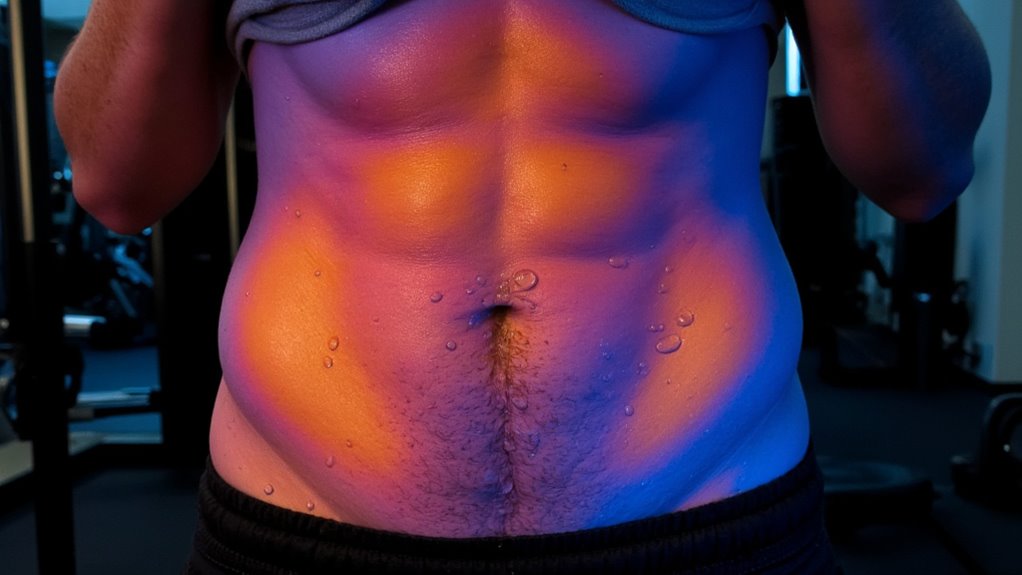
When your body temperature begins to rise, either during an intense workout or on a scorching summer day, your nervous system activates a remarkable cooling mechanism called sweating.
Your hypothalamus, the brain’s temperature control center, signals your 2-4 million sweat glands to release moisture onto your skin’s surface.
Your body’s internal thermostat triggers millions of microscopic moisture factories, creating nature’s perfect cooling system with every drop.
As Dr. Michael Thompson, exercise physiologist, explains, “Sweating is primarily about thermoregulation, not fat loss. While a higher metabolic rate burns calories, the sweat itself doesn’t eliminate fat.”
This process, which varies based on genetics and fitness level, helps maintain your ideal body temperature without directly contributing to belly fat reduction.
Debunking the Myth: Why Sweating Alone Doesn’t Burn Fat
Despite popular gym lore, the visible sweat dripping down your face during an intense workout isn’t melting away belly fat. Sweating mainly regulates your body temperature, not your waistline.
Understanding this distinction can revolutionize your approach to physical activity.
To achieve meaningful fat loss, focus on:
- Creating a sustainable calorie deficit through balanced nutrition and portion control
- Engaging in consistent aerobic exercise that elevates heart rate for 30-60 minutes
- Building lean muscle through resistance training to boost metabolic rate
- Maintaining a healthy diet rich in protein, fiber, and essential nutrients
Dr. Simmons notes, “Weight lost through excessive sweating is primarily water weight that returns upon rehydration.”
Water Weight vs. Fat Loss: Understanding the Difference

Many fitness enthusiasts get caught up in the misconception that profuse sweating during workouts directly translates to fat reduction. However, understanding the fundamental difference between water weight fluctuation and actual fat loss is crucial for effective weight management.
| Type of Loss | Timeframe | Sustainability |
|---|---|---|
| Water Weight | Immediate | Returns upon rehydration |
| Fat Loss | Gradual (weeks) | Permanent with maintenance |
| Muscle Loss | Variable | Depends on nutrition |
When you sweat profusely, you’re primarily losing water weight, not burning significant fat. True fat loss requires creating a calorie deficit over time. Your body must burn more calories than you consume, which happens through consistent exercise and dietary adjustments—not simply by sweating more.
How Exercise Intensity Affects Both Sweating and Calorie Burn
The relationship between exercise intensity and physiological responses reveals a critical connection that many fitness enthusiasts misunderstand.
Exercise intensity creates measurable physiological changes that most fitness devotees fail to properly recognize and leverage.
Your body’s sweating mechanism activates more aggressively during high-intensity interval training, not because you’re shedding fat, but because your internal temperature rises with exertion levels.
When you increase exercise intensity, four distinct processes occur:
- Your metabolic rate considerably increases, burning 600-800 calories hourly versus 300-400 at lower intensities.
- Sweating increases proportionally to regulate body temperature.
- Calorie burn continues post-exercise through EPOC (excess post-exercise oxygen consumption).
- Improved cardiovascular conditioning enables longer, more intense workouts over time.
The Real Connection Between Perspiration and Weight Management

Exactly how perspiration relates to fat loss remains one of fitness’s most misunderstood relationships, creating confusion for those seeking effective weight management strategies.
While you’ll certainly sweat during intense workouts that burn calories, the perspiration itself isn’t directly burning fat—it’s regulating your body temperature.
As exercise physiologist Dr. Sarah Jenkins explains, “The weight lost through sweating is temporary water weight, not adipose tissue reduction.”
Your body’s caloric expenditure during exercise, rather than the amount you sweat, determines actual fat loss.
Understanding this distinction helps you focus on sustainable practices that genuinely support weight management instead of deceptive metrics.
Effective Strategies for Targeting Stubborn Belly Fat
While many people believe spot reduction is possible, effectively targeting stubborn belly fat requires a comprehensive approach that addresses both exercise and nutrition simultaneously.
Research confirms that sweating alone doesn’t burn belly fat, but it does indicate caloric expenditure during properly structured workouts.
To maximize abdominal fat reduction, implement these evidence-based strategies:
- Perform 150+ minutes of cardio weekly to increase metabolic rate and enhance fat oxidation.
- Incorporate HIIT workouts 2-3 times weekly, which burn calories efficiently and target visceral fat.
- Maintain a 500-calorie daily deficit through nutritional adjustments while preserving lean protein intake.
- Include resistance training to build muscle mass, which elevates resting metabolism and accelerates fat loss.
Why Sweat Suits and Saunas Won’t Shrink Your Waistline
Many people are drawn to sweat suits and saunas with the appealing promise of melting away stubborn belly fat through profuse sweating, but this approach fundamentally misunderstands how fat loss actually works in the human body.
When you sweat in these passive heating environments, you’re simply losing water weight—not burning fat. In line with research, this temporary weight loss returns once you rehydrate.
True fat loss requires a sustained calorie deficit through proper nutrition and aerobic exercise, which activates fat metabolism after 30-60 minutes of activity.
As Dr. Martin explains, “Passive sweating doesn’t engage muscles or create the metabolic conditions necessary for adipose tissue reduction.”
You’ll need more than sweat for lasting results.
Hydration’s Critical Role in Metabolism and Fat Loss
Regarding effective fat loss, proper hydration stands as an often-overlooked cornerstone of your metabolic health. Research indicates that even mild dehydration can reduce your metabolism by up to 3%, hindering your weight loss efforts despite rigorous exercise regimens.
Water’s strategic role in fat oxidation manifests through several critical pathways:
- Optimizes metabolic efficiency, facilitating the biochemical reactions needed to convert stored fat into usable energy.
- Reduces calorie intake when consumed before meals, naturally supporting your caloric deficit.
- Enhances nutrient transport throughout your system, promoting cellular function and recovery.
- Regulates appetite signals, helping you distinguish between thirst and hunger.
Hydration isn’t merely about quenching thirst—it’s fundamentally reshaping your body’s fat-burning capacity.
Building a Sustainable Fitness Plan Beyond the Sweat Factor

Developing a sustainable fitness plan extends far beyond merely seeking sweat-inducing activities, as effective belly fat reduction requires a strategic, multi-faceted approach to physical activity and recovery.
You’ll need to balance 150-300 minutes of weekly cardiovascular exercise with at least two strength training sessions, which together optimize body composition changes rather than relying solely on sweating as a metric of effectiveness.
As exercise physiologist Dr. Martin notes, “HIIT workouts efficiently burn calories while improving metabolic function, making them particularly valuable for stubborn belly fat reduction.”
Your program should systematically progress in intensity while incorporating adequate recovery periods, allowing your body to adapt and continue burning calories efficiently.
Common Sweating Misconceptions That Sabotage Weight Loss Goals
Despite the popularity of sweat-inducing workouts and heat-based weight loss methods, several fundamental misconceptions about sweating and fat loss continue to derail people’s weight management efforts.
While sweat-inducing workouts promise quick results, they perpetuate harmful myths that can sabotage effective weight management strategies.
You’ve likely encountered these sweating misconceptions that can hinder your progress:
- Believing that profuse sweating equals greater caloric expenditure, when in reality, your ability to burn calories depends on exercise intensity, not perspiration volume.
- Assuming temporary weight reduction after sweating represents fat loss instead of water loss.
- Relying on “sweat-enhancing” garments that provide no metabolic benefit.
- Prioritizing hot workouts over consistent, varied exercise routines that effectively support sustainable weight loss goals.
Frequent Questions and Answers on Does Sweating Burn Belly Fat?
What Exercise Burns the Most Belly Fat?
High-intensity intervals burn the most belly fat. You’ll maximize results by combining cardio workouts, strength training, and core exercises—all act as metabolism boosters when you’re consistently challenging your body.
How Can I Lose Belly Fat Fast?
You’ll lose belly fat fast by creating a caloric deficit, combining high intensity intervals with targeted abdominal workouts, making smart dietary changes, and prioritizing hydration importance for ideal metabolic function.
Is Sweating Good for You to Lose Weight?
Ah, sweating—nature’s way of making you feel productive while accomplishing little! Your sweat benefits include metabolic boost through workout intensity, not magical fat loss myths. Maintain proper hydration habits for effective weight management.
Does Wearing Sweats Help Burn Fat?
No, wearing sweats won’t boost your metabolism for fat loss. Your workout intensity determines calorie burning, not clothing. Sweats just increase water loss without affecting your actual fat-burning effectiveness.