



This content is for informational purposes only, not medical advice, and may include affiliate links. We may earn a commission at no extra cost to you. See our Disclaimer for details.
Nearly 40% of Americans report actively attempting to reduce belly fat, with carbohydrates often blamed as the primary culprit. You’ve likely heard conflicting advice about carbs and their relationship to abdominal adiposity—some experts claim carbs directly cause fat accumulation, while others argue quality matters more than quantity. “The physiological relationship between carbohydrate intake and visceral fat deposition is complex and often misunderstood,” notes Dr. Sarah Jenkins, endocrinologist at Harvard Medical School. Understanding how different carbohydrates affect your insulin response may be the missing piece in your weight management journey.
In a Nutshell
- Refined carbohydrates trigger insulin spikes that promote visceral fat storage around the abdomen.
- Not all carbs are equal—complex carbs from whole foods cause milder insulin responses than simple carbs.
- Quality matters more than quantity; high-fiber carbs can actually reduce belly fat by 3.7% over five years.
- High-glycemic index foods correlate with increased waist circumference due to metabolic mechanisms favoring fat storage.
- A balanced approach combining carb quality, protein, and healthy fats helps regulate insulin and reduce abdominal fat.
The Science Behind Carbohydrates and Fat Storage
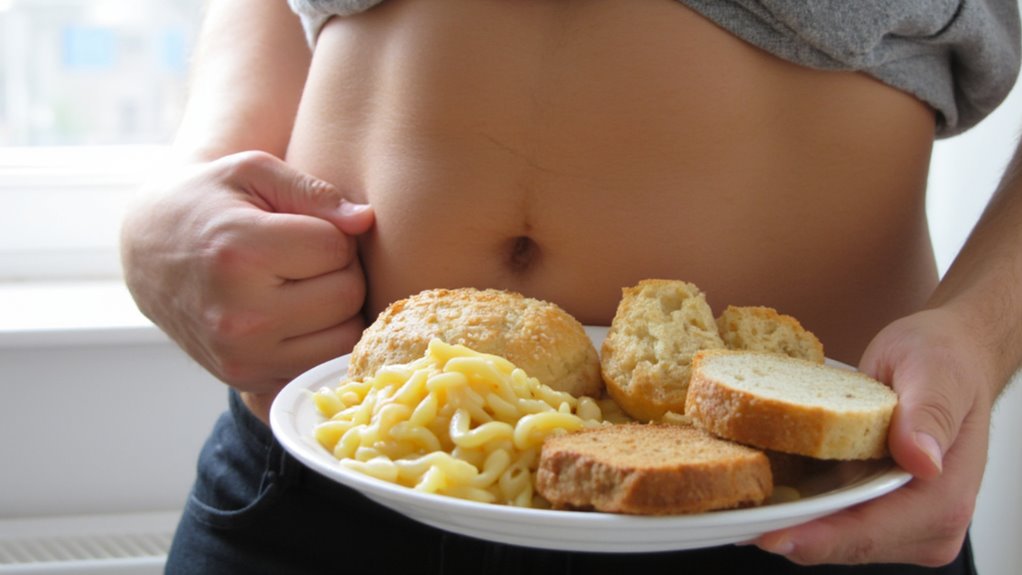
While many dieters focus primarily on calories, the relationship between carbohydrates and abdominal fat storage involves complex biochemical mechanisms that greatly impact your body composition.
When you consume refined carbs, especially those with a high glycemic index, your insulin levels spike dramatically. This hormonal response fundamentally instructs your body to store excess energy as visceral fat, particularly around your midsection.
Dr. Sarah Thompson explains, “Insulin acts as a storage hormone, directing glucose into cells and promoting fat storage when carbohydrates are consumed in excess.”
Beyond creating a caloric surplus that leads to weight gain, high-carb diets specifically encourage belly fat accumulation through these insulin-mediated pathways, unlike complex carbs which produce milder responses.
As you age, particularly after 40, hormonal changes such as a declining estrogen level can shift fat storage to the abdomen, compounding the effects of high-carb diets on belly fat accumulation.
Simple vs. Complex Carbs: Impact on Your Waistline
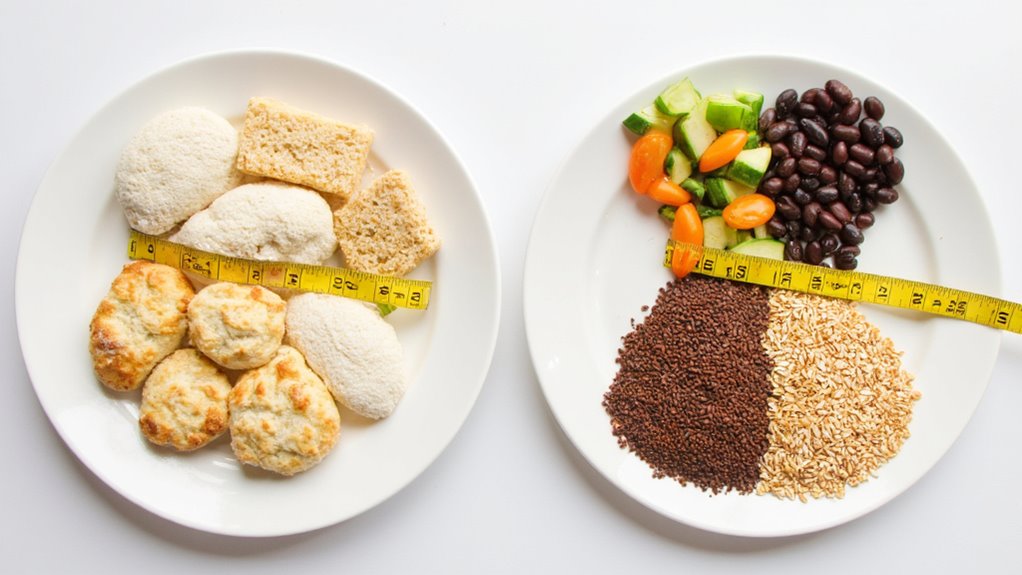
Not all carbohydrates affect your body in the same way, which becomes evident when examining their impact on abdominal fat accumulation.
Simple carbohydrates from refined foods trigger rapid insulin spikes, promoting abdominal fat storage, while complex carbohydrates offer sustained energy that can actually support your weight management efforts. Increasing soluble fiber from oats and legumes can reduce belly fat by 3.7% over five years.
| Carb Type | Glycaemic Index | Effect on Belly Fat | Food Sources |
|---|---|---|---|
| Simple | High (70+) | Increases storage | Candy, soda, white bread |
| Complex | Medium (56-69) | May reduce when portioned | Whole wheat, beans |
| Fibrous | Low (<55) | Often decreases | Vegetables, legumes |
Your freedom to achieve a leaner waistline depends partly on replacing refined carbs with nutrient-dense whole grains that regulate calorie intake naturally.
How Insulin Response Affects Belly Fat Accumulation
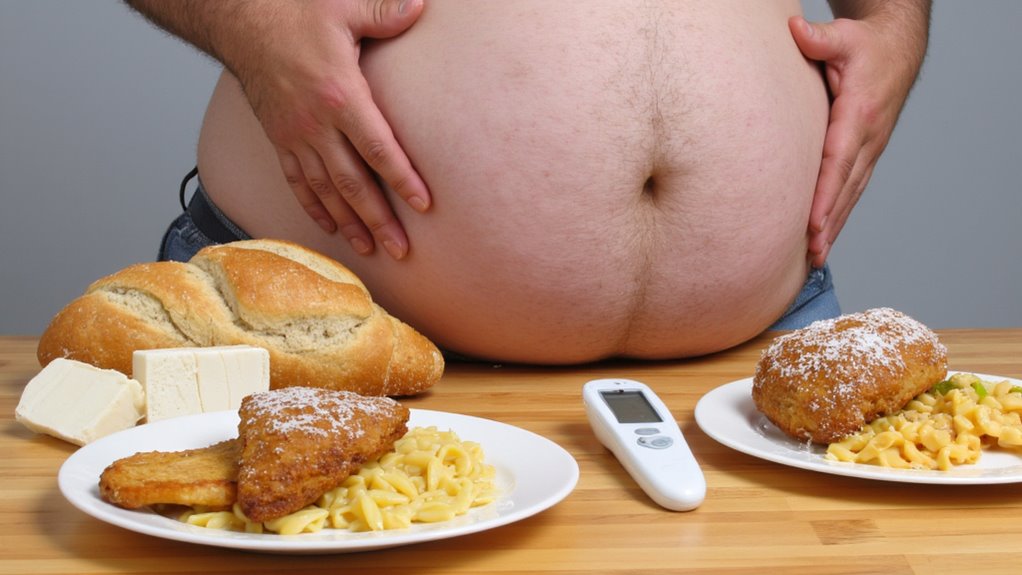
Your body’s insulin response represents the hidden mechanism behind why some people struggle with persistent belly fat despite vigilant dietary efforts.
When you consume high-GI foods, your insulin levels spike dramatically, triggering a cascade of metabolic events that promote fat storage, particularly visceral fat around your abdomen.
Research demonstrates that consistent carbohydrate intake above your metabolic needs correlates with increased waist circumference over time.
“The glycemic index of your food choices directly influences your insulin response,” explains Dr. Samantha Klein, endocrinologist. Hormonal changes, such as increased cortisol from stress or alterations during menopause, also contribute significantly to the persistence of belly fat.
Balanced Nutrition: Including Carbs in a Weight Management Plan
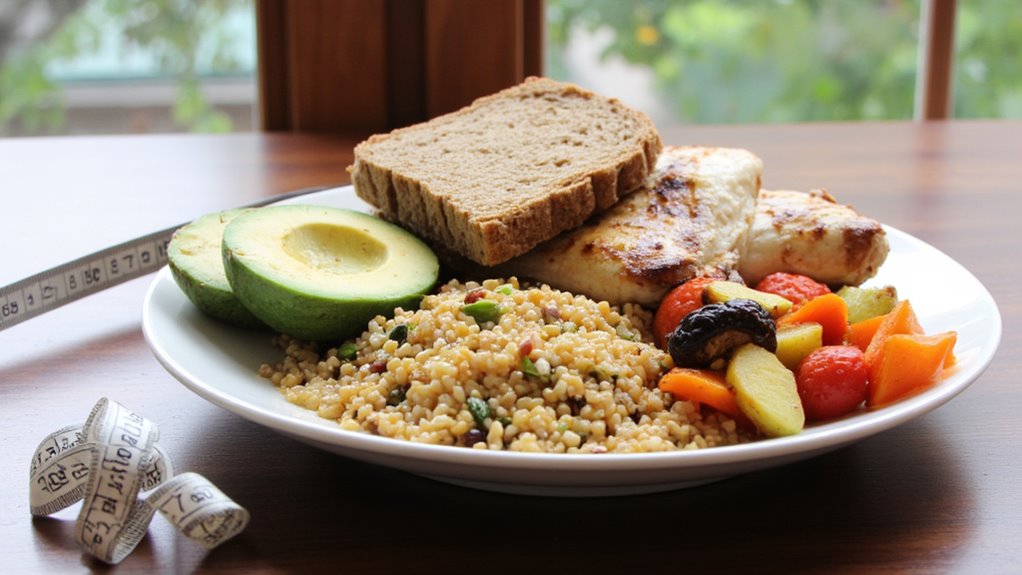
Contrary to popular diet trends that demonize carbohydrates, successful weight management actually depends on strategic carbohydrate inclusion rather than wholesale elimination.
“The key distinction lies in carbohydrate quality, not merely quantity,” notes Dr. Anderson.
You’ll optimize your balanced nutrition approach by filling half your plate with fruits and vegetables, a quarter with lean protein, and a quarter with whole grains.
Aim for 25-38 grams of fiber intake daily to reduce overall calorie intake and combat belly fat. Limit added sugars to under 10% of daily calories, focusing instead on nutrient-dense carbs that promote satiety.
Research confirms that carbs balanced with protein and healthy fats help manage hunger, supporting your weight management goals. Incorporating gentle core-strengthening exercises postpartum can also aid in reducing belly fat while helping to rebuild core strength.
Research-Backed Strategies for Reducing Abdominal Fat
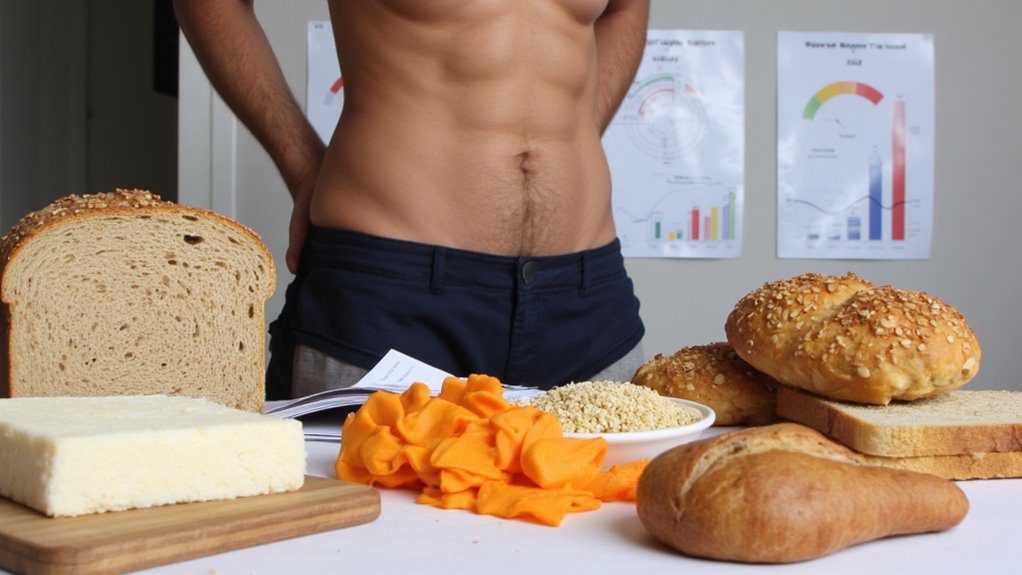
Research consistently demonstrates that targeted strategies can considerably reduce abdominal fat, addressing both subcutaneous (under the skin) and visceral (surrounding organs) fat deposits.
“The science behind belly fat reduction has evolved substantially in recent years, showing that specific dietary and lifestyle modifications yield measurable results,” explains Dr. Amelia Chen, endocrinologist at Harvard Medical Center. One effective approach is to increase soluble fiber intake from sources like oats, beans, and fruits, which can reduce visceral fat and enhance fullness.
| Strategy | Mechanism | Evidence |
|---|---|---|
| Limit refined carbs | Reduces insulin spikes | 33% less belly fat accumulation |
| Add soluble fiber | Decreases fat absorption | 3.7% reduction over 5 years |
| Eliminate trans fats | Improves lipid metabolism | Up to 33% less abdominal fat |
| Maintain aerobic exercise | Enhances fat oxidation | 300 min/week ideal for fat loss |
Creating a caloric deficit while controlling insulin levels through smart carbohydrate choices remains fundamental to effective abdominal fat reduction.
Frequent Questions and Answers
Can Cutting Carbs Reduce Belly Fat?
Like Sisyphus finding a shortcut, you’ll see significant belly fat reduction when you cut carbs. Lower insulin levels decrease fat storage, while proper portion control prevents metabolic slowdown. Combine with exercise for sustainable results.
Which Foods Increase Belly Fat?
You’re packing on belly fat with sugary beverages, refined grains like white bread, processed snacks, fried foods, fast food, high fructose products, potato chips, and candy bars containing sugar alcohols.
What Is the Number One Cause of Belly Fat?
The number one cause of belly fat is consuming more calories than you burn. Your lifestyle choices, dietary patterns, stress levels, and sedentary behavior all contribute to this caloric surplus that expands your waistline.
What’s the Worst Carb for Belly Fat?
Like silent assassins, refined sugars in sodas, candies, white bread, and pastries are your worst belly fat enemies. You’ll want to limit these processed carbs that spike insulin and trigger abdominal fat storage.