This content is for informational purposes only, not medical advice, and may include affiliate links. We may earn a commission at no extra cost to you. See our Disclaimer for details.
As your hormones shift, your waistline expands, and your metabolism slows. If you’ve noticed stubborn fat accumulating around your midsection after 40, you’re experiencing a common physiological phenomenon affecting approximately 90% of perimenopausal women. “The decline in estrogen during this life stage fundamentally alters fat distribution patterns, directing adipose tissue primarily to the abdominal region,” explains Dr. Sarah Gottfried, endocrinologist and women’s health specialist. Understanding the hormonal mechanisms behind this frustrating change is your first step toward effectively addressing it.
In a Nutshell
- Estrogen decline during perimenopause and menopause redirects fat storage to the abdomen, creating the “menopot” or “menopausal pooch.”
- Metabolism slows by approximately 10% after 40, while rising cortisol levels promote additional abdominal fat deposition.
- Prioritize 150 minutes of cardio plus twice-weekly strength training to combat muscle loss and boost metabolism.
- Focus on fiber-rich whole foods (25-30g daily) and healthy fats while reducing processed carbs and sugar.
- Aim for 7-8 hours of quality sleep and stress-reduction techniques to lower cortisol levels that contribute to belly fat.
Understanding Hormonal Changes After 40
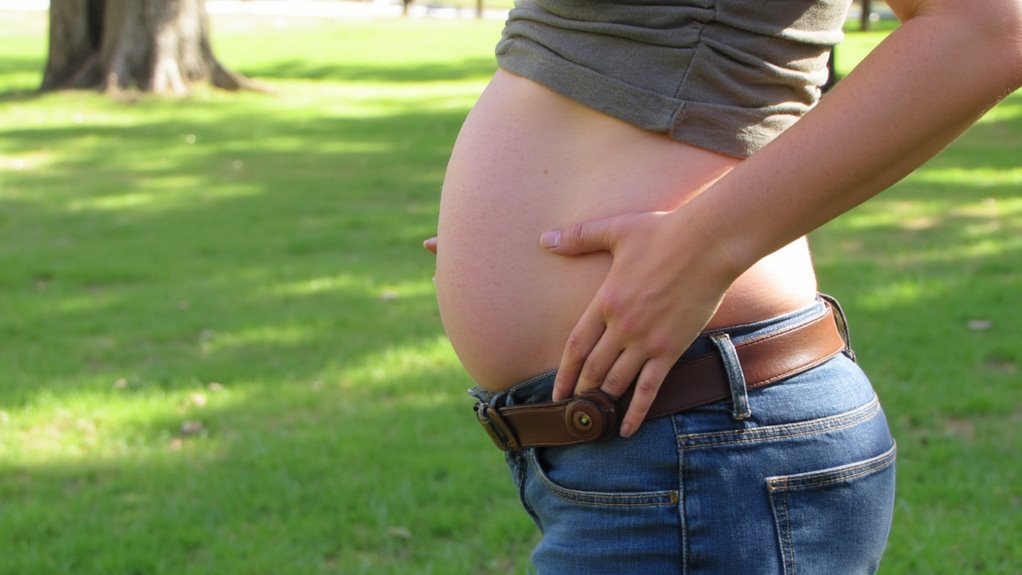
As women approach the milestone of turning 40, profound hormonal shifts begin to transform both their reproductive capabilities and their body’s fat distribution patterns.
Your body’s decreasing production of estrogen and progesterone triggers metabolic changes that directly influence abdominal fat accumulation, often referred to as “menopot.”
These hormonal changes fundamentally alter how your body processes calories and stores fat, with research showing a significant shift toward midsection weight gain.
“The decline in reproductive hormones creates a perfect storm for menopausal weight gain,” explains Dr. Sarah Gottfried, endocrinologist.
Hormonal shifts during midlife create the perfect metabolic environment for stubborn abdominal weight gain.
Additionally, these fluctuations disrupt sleep patterns, affecting hunger-regulating hormones and further complicating your weight management efforts during this changeable phase.
The Science Behind Menopausal Belly Fat

While your midsection expands during midlife, there’s a complex biological process unfolding beneath the surface that explains this stubborn weight gain.
Estrogen, which once regulated your fat distribution, plummets during menopause, causing your body to redirect fat storage to your abdomen.
The dramatic hormonal changes trigger a perfect storm for belly fat accumulation,” notes endocrinologists.
Your metabolism simultaneously slows by approximately 10%, while stress hormones like cortisol rise, further encouraging abdominal fat deposition.
You’ll also experience altered hunger signals—decreased leptin and increased ghrelin—making you feel hungrier despite needing fewer calories, a frustrating reality when fighting this hormonally-driven pattern.
Key Hormones Affecting Midlife Weight Distribution
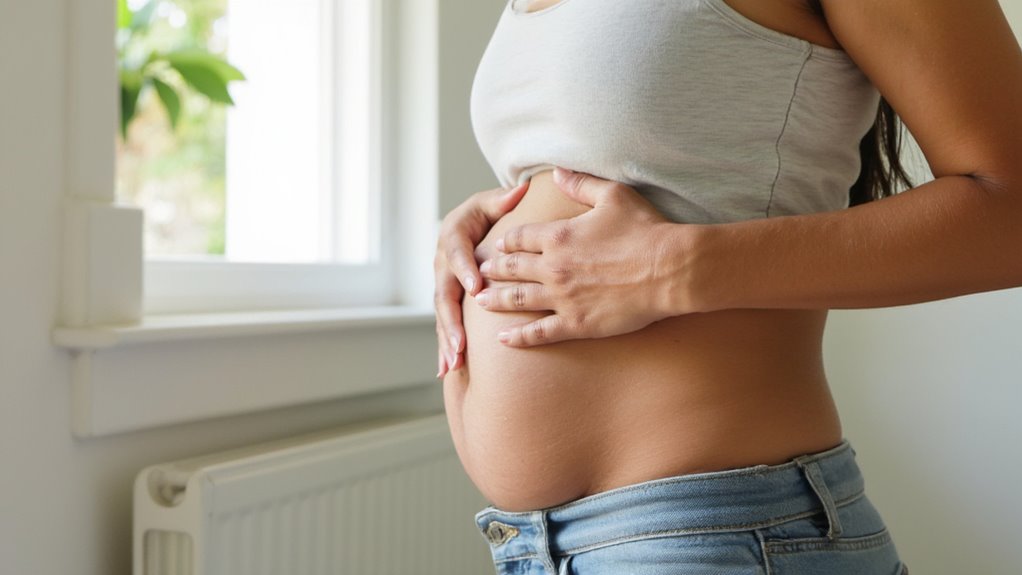
Several key hormones orchestrate the frustrating redistribution of body fat you’re experiencing after 40, creating what many women describe as the “menopausal pooch.”
Estrogen, the hormone that once helped maintain your hourglass figure, dramatically declines during perimenopause, causing your body to redirect fat storage from your hips and thighs to your abdomen.
“This hormonal shift fundamentally rewrites your body’s fat distribution map,” explains Dr. Wexler.
As estrogen levels drop, insulin resistance often develops, altering how your body processes glucose and promoting abdominal fat accumulation.
Meanwhile, declining testosterone reduces muscle mass, slowing metabolism and changing your overall body composition.
Simultaneously, elevated cortisol from chronic stress compounds these effects, specifically targeting visceral fat storage.
Signs Your Belly Fat Is Hormone-Related
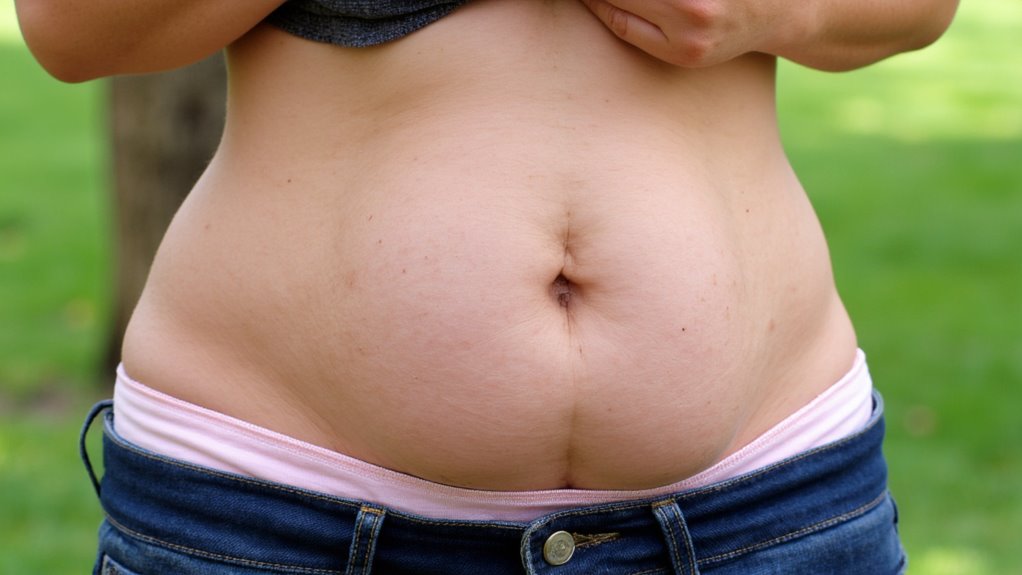
Identifying if your expanding waistline stems from hormonal changes rather than simple caloric excess requires recognizing specific patterns that emerge during midlife shifts.
The distinguishing factor between regular weight gain and hormonal belly fat lies in its resistance to traditional diet and exercise approaches,” notes Dr. Elizabeth Ross, endocrinologist specializing in women’s health.
Your body may be experiencing hormonal imbalance if:
- You’ve noticed persistent abdominal weight gain despite maintaining consistent eating habits
- Your cortisol levels increase due to chronic stress, triggering fat storage specifically around your midsection
- You experience disrupted sleep patterns alongside inexplicable sugar cravings
These indicators suggest your metabolism is responding to hormonal fluctuations rather than caloric surplus alone.
The Role of Estrogen Decline in Abdominal Weight Gain
One fundamental factor driving stubborn abdominal weight gain after 40 lies in your body’s changing estrogen levels – a hormonal shift that transforms how your body stores fat.
“Estrogen decline represents the metabolic turning point many women experience during perimenopause and menopause,” explains Dr. Sarah Jenkins, endocrinologist.
As your estrogen diminishes, you’ll notice fat redistributing mainly to your abdominal region. This hormonal change disrupts your hunger-regulating hormones and slows metabolism by reducing muscle mass.
Research shows this decline also increases insulin resistance by 15-20%, promoting visceral fat accumulation around your organs – precisely the type linked to cardiovascular disease and diabetes.
How Stress Hormones Contribute to the “Menopot”

While estrogen decline initiates the metabolic shift toward abdominal weight gain, chronic stress amplifies this problem through its powerful hormone cortisol—often called the “belly fat hormone” for good reason.
“When you’re constantly stressed, your cortisol remains elevated, fundamentally instructing your body to store fat centrally around your midsection,” notes Dr. Sarah Gottfried, hormone specialist.
Your body during menopause becomes particularly susceptible to stress hormones’ fat-storing effects:
- Cortisol triggers visceral fat accumulation, creating the characteristic “menopot” appearance around your abdomen.
- Stress disrupts hunger-regulating hormones (leptin/ghrelin), increasing cravings for calorie-dense foods.
- Cortisol-induced insulin resistance further promotes abdominal fat storage, compounding age-related metabolic changes.
Sleep Disruption and Its Impact on Hormonal Belly
The intimate relationship between sleep and hormonal regulation becomes particularly problematic during perimenopause and menopause, when your body’s natural sleep architecture undergoes considerable disruption.
This insomnia typically persists for four to eight years, creating a perfect storm for hormonal belly development. Poor sleep quality directly alters your hunger hormones—increasing ghrelin while decreasing leptin—making weight gain, especially around the abdomen, almost inevitable.
“When women experience chronic sleep deprivation, cortisol levels rise considerably, promoting visceral fat accumulation,” explains sleep researchers.
The National Sleep Foundation recommends at least seven to eight hours of quality sleep nightly to maintain hormonal balance and prevent the stubborn weight gain that plagues women over 40.
Nutrition Strategies to Balance Hormones Naturally

As hormone levels fluctuate during perimenopause and beyond, your nutritional choices become powerful tools for managing stubborn abdominal fat.
“Strategic dietary modifications represent one of the most effective interventions for hormonal rebalancing after 40,” notes Dr. Elizabeth Tanner, endocrinologist at Women’s Metabolic Health Center.
Your nutrition framework for ideal hormonal balance should prioritize:
- Incorporate fiber-rich whole foods (25-30g daily) to stabilize insulin levels
- Include healthy fats from avocados, olive oil, and nuts to support hormone production
- Reduce processed carbohydrates and sugars, which can trigger insulin spikes and fat storage
Hydration remains equally crucial, as adequate water intake supports metabolic function and diminishes false hunger signals that disrupt hormonal balance.
Effective Exercise Approaches for Hormonal Weight Loss

Transforming your exercise routine becomes critical after 40, when hormonal fluctuations accelerate stubborn belly fat accumulation despite traditional weight loss efforts.
Exercise requirements shift considerably during perimenopause and menopause, requiring strategic adjustments to combat hormonal belly fat,” explains Dr. Sarah Jensen, endocrinologist.
Strategic exercise adjustments become essential during perimenopause and menopause to effectively combat hormonal belly fat.
You’ll need a balanced approach: 150 minutes of cardio weekly, combined with weight training twice weekly to preserve muscle mass.
High-intensity interval training (HIIT) delivers exceptional metabolic benefits, effectively addressing hormonal imbalances while maximizing fat burning in shorter sessions.
Exercise consistently three to four times weekly, incorporating variety to prevent plateaus and better regulate insulin, cortisol, and estrogen levels.
Medical Treatments and Hormone Therapy Options
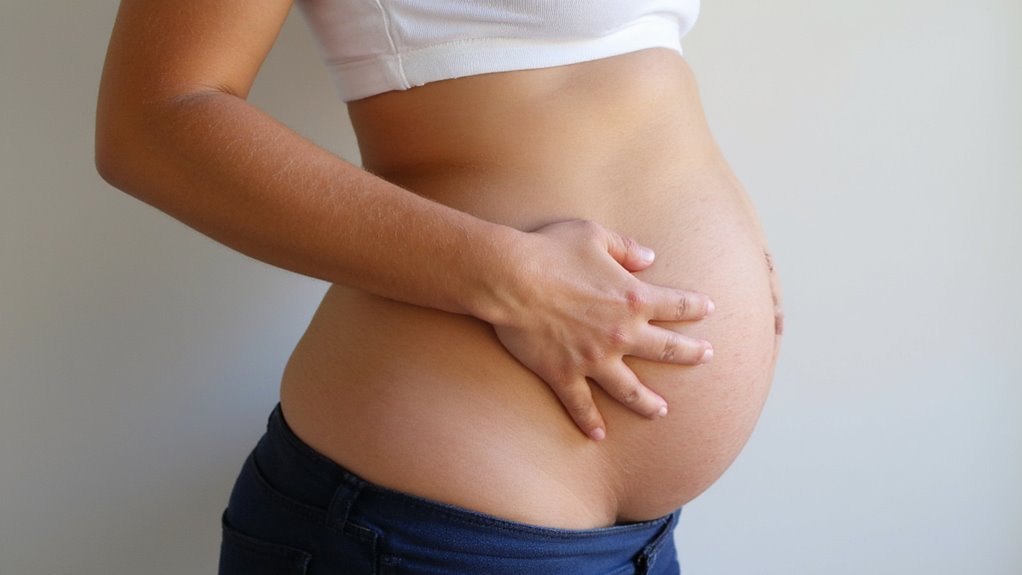
Medical intervention offers targeted approaches for women battling hormonal belly fat when lifestyle changes alone prove insufficient.
“Many patients don’t realize that certain medical treatments can address the underlying hormonal imbalances contributing to midlife weight gain,” notes Dr. Elizabeth Tanner, reproductive endocrinologist.
Consider these medical options:
- Hormone therapy (HT) may redistribute abdominal fat while alleviating severe menopausal symptoms, though it’s not prescribed specifically for weight loss.
- Regular hormone level monitoring helps adjust treatment plans effectively, preventing health problems associated with hormonal imbalances.
- Medication review with your doctor can identify weight gain culprits like SSRIs and examine alternatives that won’t exacerbate belly fat accumulation.
Lifestyle Adjustments That Combat Hormonal Belly Fat

Lifestyle interventions represent the cornerstone of managing hormonal belly fat for women navigating midlife changes, offering sustainable solutions without medical side effects.
“The body’s metabolic response to hormonal shifts can be effectively countered through targeted daily habits,” explains Dr. Amanda Lee, endocrinologist at Women’s Health Institute.
You’ll need to address weight gain around your midsection through strategic lifestyle changes. Incorporate whole foods rich in fiber while reducing processed sugars to regulate insulin levels.
Commit to both strength training and cardio exercise three times weekly, which combats the metabolic slowdown triggered by hormonal fluctuations.
Prioritize seven to eight hours of quality sleep and implement stress-reduction techniques to lower cortisol, a hormone directly linked to abdominal fat storage.
When to Consult a Healthcare Provider About Weight Changes
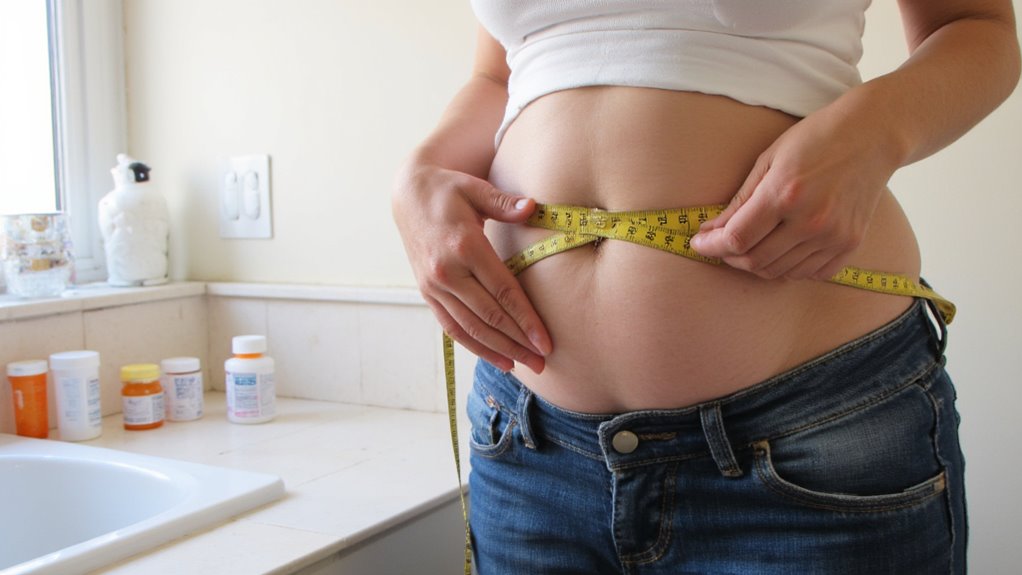
While daily lifestyle adjustments form the foundation of managing hormonal weight changes, recognizing when these shifts require professional attention represents a critical aspect of midlife health management.
“Women often dismiss weight gain as an inevitable part of aging, but sudden or unexplained changes, particularly around the abdomen, should prompt a conversation with your healthcare provider,” notes Dr. Elizabeth Rosen.
Don’t ignore these warning signs:
- Unexplained weight gain combined with fatigue, mood swings, or sleep disturbances
- Menstrual irregularities coinciding with increased abdominal fat
- Persistent cravings for sugary foods or carbohydrates
Healthcare providers can conduct hormone panels to identify underlying imbalances causing stubborn weight gain, often revealing treatable conditions like thyroid dysfunction or perimenopause-related insulin resistance.
Frequent Questions on Hormonal Belly Fat Female Over 40
What Does a Cortisol Belly Look Like?
Your midsection may carry extra cushioning due to cortisol effects, creating an apple-shaped figure with fat distribution concentrated around your waist. Implementing stress strategies can help reduce this unwanted abdominal expansion.
How Do You Fix Hormonal Imbalance Belly Fat?
You’ll need to make diet adjustments focusing on whole foods, establish consistent exercise routines including strength training, and practice stress management techniques like mindfulness to effectively combat hormonal belly fat.
How Do I Get Rid of My Perimenopause Belly?
Sarah shed her perimenopause belly by combining targeted dietary changes (more plants, less sugar), consistent exercise routines (strength training + cardio), and daily stress management techniques. You’ll feel liberated doing the same!
How Do I Know if My Belly Fat Is Hormonal?
You’ll recognize hormonal belly fat when you notice changes in weight distribution despite unchanged habits, your stress levels remain high, and hormonal changes affect where fat accumulates—typically around your midsection.