
This content is for informational purposes only, not medical advice, and may include affiliate links. We may earn a commission at no extra cost to you. See our Disclaimer for details.
Picture the stubborn layer of stomach fat as a fortress that requires multiple strategies to breach, not just one simplistic attack. You’ll uncover that sustainable belly fat reduction isn’t about crash diets or endless crunches, but rather a comprehensive approach involving proper nutrition, targeted exercise, and lifestyle modifications. Research from the Mayo Clinic shows that visceral fat responds differently to various interventions than subcutaneous fat does. “The biochemistry of abdominal fat makes it particularly responsive to certain hormonal and metabolic interventions,” explains Dr. Michael Jensen, endocrinologist and obesity researcher. What specific combination works most effectively?
In a Nutshell
- Get 7+ hours of quality sleep nightly to regulate hormones and prevent cortisol-induced belly fat storage.
- Consume 25-30 grams of protein per meal to boost metabolism and increase satiety.
- Perform 150 minutes of moderate-intensity exercise weekly plus strength training 2-3 times weekly.
- Choose fiber-rich whole foods (3+ grams per serving) and limit sugar to under 5 grams per serving.
- Practice stress-reduction techniques like meditation or yoga to lower cortisol levels that contribute to abdominal fat.
Understanding the Two Types of Stomach Fat
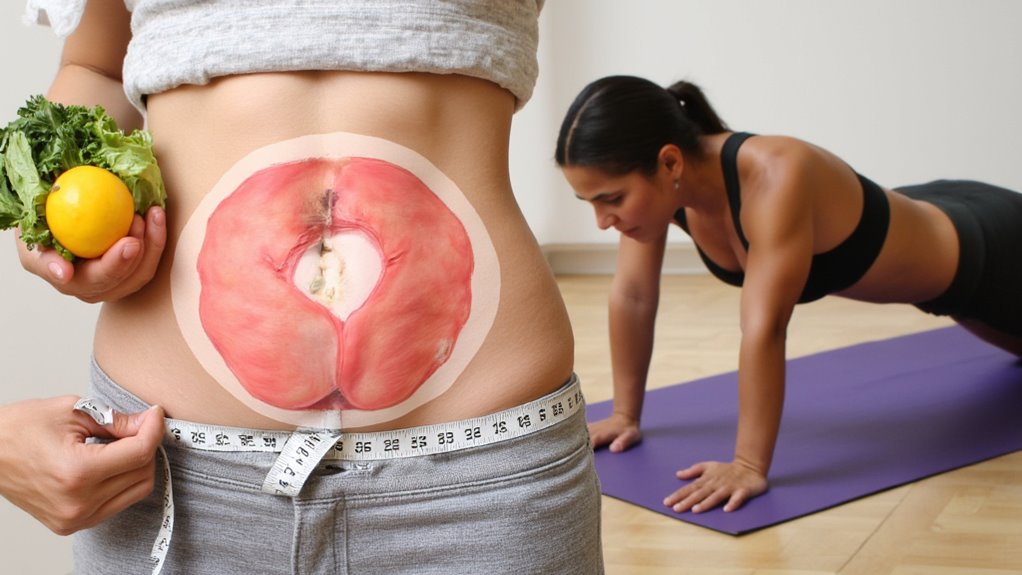
In addressing stomach fat, understanding what you’re up against is the first step toward effective reduction.
Your body stores fat in two primary ways: subcutaneous fat, which lies just beneath your skin and can be pinched, and visceral fat, which surrounds your internal organs deep within your abdomen.
While subcutaneous fat comprises about 90% of total body fat, it’s the visceral fat that poses greater health risks. Hormonal changes, particularly in women over 40, can lead to increased abdominal fat storage, which is often attributed to shifts in estrogen and cortisol levels.
Measuring your waist circumference provides insight into your visceral fat levels—35+ inches for women and 40+ inches for men signals potential metabolic issues requiring immediate attention.
1. Why Sleep Quality Matters for Fat Loss

While addressing the different types of fat in your body provides the foundation for understanding stomach fat, the quality of your sleep represents an equally powerful factor that directly impacts your body’s fat-storage mechanisms.
Research demonstrates that inadequate sleep—less than seven hours nightly—triggers hormonal imbalances that sabotage your weight loss efforts. When you’re sleep-deprived, cortisol levels rise, prompting your body to store more belly fat while disrupting insulin sensitivity.
As Dr. Matthews explains, “Consistent quality sleep is non-negotiable for effective fat loss, as it regulates metabolic functions essential for processing nutrients properly.” Your biological systems require this recovery time to maintain the delicate hormonal balance necessary for reducing stomach fat.
Additionally, stress management techniques play a crucial role in mitigating cortisol-induced fat retention, which is often exacerbated by poor sleep quality.
2. Protein-Rich Foods That Target Abdominal Fat
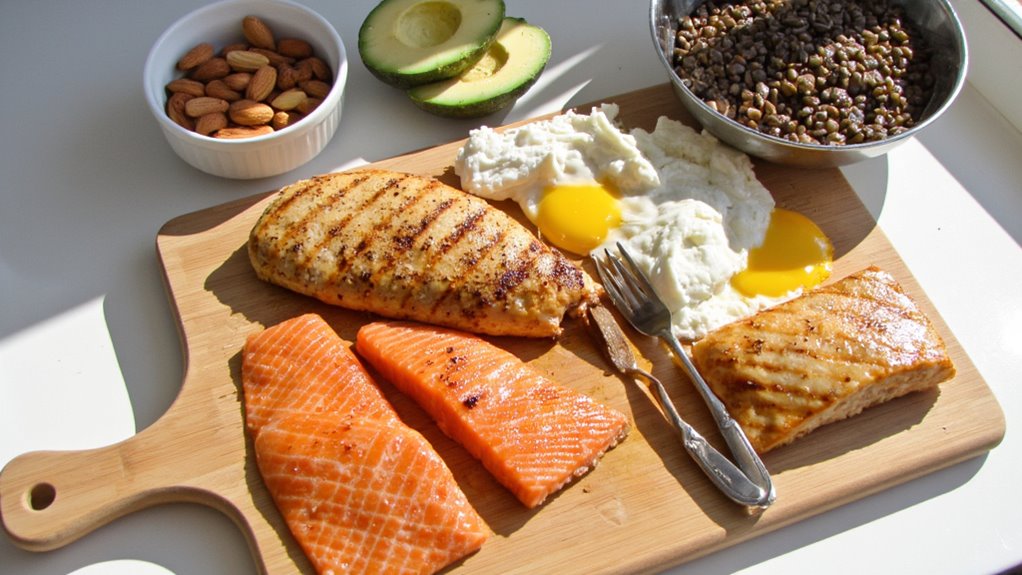
Protein’s powerful influence on abdominal fat reduction stands at the forefront of effective dietary strategies for reshaping your midsection.
Research demonstrates that consuming 25-30 grams of protein per meal considerably increases metabolic rate and enhances fat oxidation, particularly targeting visceral fat deposits.
You’ll experience greater satiety through protein’s stimulation of peptide YY, the hormone that regulates appetite and helps you naturally consume fewer calories throughout the day.
Get leaner faster by leveraging protein’s unique ability to boost metabolism and target stubborn visceral fat.
- Incorporate lean animal sources like fish, eggs, and poultry, which provide complete amino acid profiles essential for preserving muscle during fat loss.
- Choose plant-based options such as beans and legumes that offer protein with additional fiber benefits.
- Include dairy products like Greek yogurt, which combines protein with calcium—a nutrient linked to abdominal fat reduction.
To further enhance belly fat reduction, increase soluble fiber intake as it can reduce visceral fat by up to 3.7% over five years.
3. Strategic Exercise for Maximum Belly Fat Reduction

Combining your dietary adjustments with proper exercise creates a powerful synergy for targeting stubborn abdominal fat. Aim for at least 150 minutes of moderate-intensity aerobic exercise weekly, complemented by strength training 2-3 times per week to optimize your body composition and metabolic rate.
“High-Intensity Interval Training is particularly effective for visceral fat reduction in less time than traditional cardio,” explains Dr. Sarah Johnson, exercise physiologist.
Don’t underestimate daily non-exercise activities, which greatly contribute to overall calorie expenditure. Additionally, incorporate core-focused exercises like Pilates or yoga to enhance abdominal muscle definition, creating a more toned appearance as belly fat diminishes through your comprehensive approach.
Incorporating soluble fiber from fruits and legumes into your diet can further assist in reducing abdominal fat by promoting satiety and aiding in digestion.
4. Stress Management Techniques to Combat Cortisol

Stress arises as a critical yet often overlooked factor in the battle against stubborn stomach fat, particularly through its influence on cortisol production. This stress hormone triggers physiological responses that promote abdominal fat storage, potentially undermining even the most diligent eating plan.
Research demonstrates that managing cortisol through deliberate stress-reduction techniques can greatly impact your body’s tendency to accumulate belly fat, as stated by endocrinologist Dr. Sarah Reynolds.
- Practice daily mindfulness meditation for 10-15 minutes to reduce cortisol levels by 23%, as shown in recent clinical studies
- Incorporate yoga 3 times weekly to lower stress hormones while improving muscle tone
- Establish consistent sleep patterns of 7-9 hours nightly to regulate cortisol production cycles
5. Hydration’s Role in Reducing Bloating and Fat

Water surfaces as a powerful, yet frequently underestimated ally in the battle against stomach fat, working through multiple physiological pathways to reduce both bloating and actual fat deposits.
Research indicates that adequate hydration can boost your metabolism by up to 30% for 30-40 minutes, directly supporting fat reduction processes. “Proper water intake effectively flushes excess sodium from your system, diminishing water retention that contributes to bloating,” explains nutrition researchers.
You’ll find that drinking 1-2 liters of additional water daily can greatly reduce waist circumference over time, especially when consumed before meals to decrease calorie intake through enhanced satiety signals. Additionally, maintaining proper hydration is crucial for creating a caloric environment conducive to weight management and combating abdominal fat.
6. Mindful Eating Practices for Weight Management

Mindful eating practices emerge as transformative techniques in the comprehensive approach to reducing stomach fat, functioning as behavioral interventions that address psychological aspects of weight management.
“When we eat mindfully, we’re engaging the prefrontal cortex, which helps regulate decision-making and impulse control,” notes Dr. Jessica Klein, nutrition specialist at Harvard Medical Center. – Focus on your food’s sensory qualities—texture, aroma, and flavor—to naturally reduce portion sizes while increasing satisfaction, a key component in weight management protocols. –
Eliminate distractions during meals to enhance your brain’s ability to register fullness signals, potentially decreasing your daily caloric intake by 15-20%. – Practice the pause-breathe-reflect technique before reaching for seconds, which strengthens your relationship with hunger cues and supports reducing belly fat.
Engaging in gentle core-strengthening exercises postpartum can effectively aid in reducing belly fat as part of a holistic fitness routine.
7. Reading Food Labels to Avoid Hidden Fat Triggers
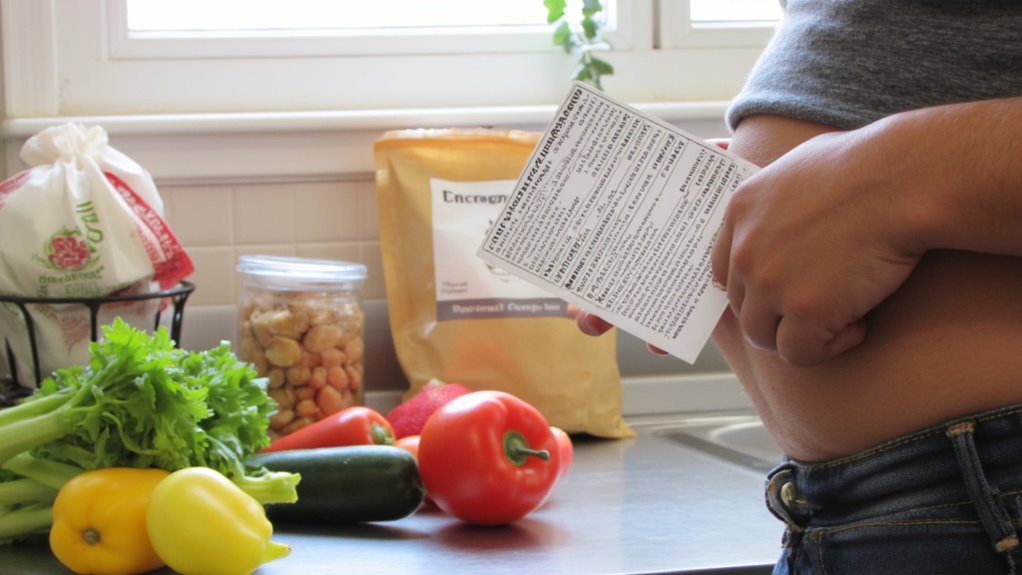
Navigating the maze of nutritional information on food packaging requires a systematic approach if you’re serious about reducing stomach fat, particularly as manufacturers often disguise problematic ingredients behind clever marketing.
“The front of a package is fundamentally advertising, while the nutrition facts panel and ingredients list reveal the scientific truth about what you’re consuming,” explains Dr. Martinez, nutritional biochemist.
| Label Component | What to Look For | What to Avoid | Impact on Belly Fat |
|---|---|---|---|
| Ingredients List | Whole, recognizable foods | Partially hydrogenated oils | Direct correlation to visceral fat |
| Sugar Content | Under 5g per serving | “Low-fat” with high sugar | Disrupts metabolic function |
| Serving Size | Realistic portions | Manipulated small servings | Prevents accidental overconsumption |
| Fiber Content | 3g+ per serving | Refined carbohydrates | Supports sustainable caloric deficit |
Building a Sustainable Lifestyle Beyond Quick Fixes

While most dieters cycle through temporary programs promising rapid belly fat reduction, sustainable weight management emerges from consistent lifestyle adjustments that become second nature over time.
“The physiological adaptations needed for long-term abdominal fat reduction require a fundamental shift in daily habits, not a 30-day challenge,” explains Dr. Rebecca Martinez, obesity specialist at Columbia University.
Sustainable fat loss demands persistent lifestyle evolution, not quick-fix programs promising overnight transformation.
- Prioritize high-protein, fiber-rich foods that promote satiety, helping you lose weight while preserving valuable muscle mass.
- Track waist circumference, not just scale weight, to measure meaningful changes in overall body fat distribution.
- Cultivate relationships with health-focused individuals who reinforce positive behaviors, strengthening your commitment to sustainable weight management.
- Breastfeeding contributes to an additional 400-500 calorie burn daily, which can aid in postpartum weight management.
Frequent Questions on Realistic Ways to Reduce Stomach Fat
How to Drastically Reduce Belly Fat?
Rome wasn’t built in a day. You’ll flatten your belly by combining daily exercise routines, healthy recipes with lean protein, and lifestyle changes like adequate sleep and strength training.
What Burns the Most Belly Fat?
HIIT workouts burn the most belly fat. You’ll maximize results by complementing them with healthy snacks throughout your day and smart hydration strategies before, during, and after exercise.
What Is the Scientifically Proven Best Way to Lose Belly Fat?
Those who combine cardio and strength training lose 20% more fat. Your scientifically-proven path combines consistent exercise routines, high-protein diet plans, and strategic fat loss strategies including quality sleep and stress management.
Can You Realistically Lose Belly Fat?
Yes, you can shed belly fat through sustainable weight loss. Prioritize hormonal balance by managing stress. You’ll need consistent, healthy habits that include both proper nutrition and regular exercise.