
This content is for informational purposes only, not medical advice, and may include affiliate links. We may earn a commission at no extra cost to you. See our Disclaimer for details.
Carrying a bit of extra abdominal weight has you contemplating the treadmill as your solution, and you’re onto something promising. Running effectively targets visceral fat—the dangerous type surrounding your organs—by creating a significant caloric deficit of 80-140 calories per mile, depending on your weight and pace. Research from the Journal of Sports Medicine shows that runners experience 67% more visceral fat reduction compared to non-runners with similar caloric deficits. Why does this matter for your health journey? The combination of metabolic impact and post-exercise oxygen consumption explains how running transforms your midsection beyond what diet alone can achieve.
In a Nutshell
- Running creates a significant caloric deficit, with a 155-pound person burning approximately 372 calories in a 30-minute run.
- Running specifically targets visceral fat (the dangerous fat surrounding organs), which responds better to cardiovascular exercise than subcutaneous fat.
- The afterburn effect continues calorie burning for up to 48 hours after running, maximizing fat loss potential.
- Combining running with high-intensity interval training (HIIT) and core-focused exercises enhances belly fat reduction results.
- A comprehensive approach including regular running, proper nutrition with adequate protein, and a caloric deficit is essential for belly fat loss.
The Science Behind Running and Belly Fat Loss

Three key physiological mechanisms explain why running is particularly effective for reducing belly fat.
First, running as an aerobic exercise creates a significant caloric deficit, with a 180-pound person burning approximately 170 calories in just 10 minutes of brisk jogging.
Second, running specifically targets visceral fat, the dangerous type surrounding your organs, which responds more readily to cardiovascular exercise than subcutaneous fat.
Third, the “afterburn effect” continues to burn calories for up to 48 hours post-run.
Running also plays a role in reducing elevated cortisol levels, which are linked to the storage of belly fat, by incorporating stress-reducing elements into your routine.
To maximize results, combine high-intensity interval training with regular running sessions and appropriate dietary changes, as overall weight loss is necessary—spot reduction remains physiologically impossible.
Understanding Visceral vs. Subcutaneous Fat

The battle against belly fat requires understanding the two distinct types of adipose tissue that comprise your abdominal region.
Visceral fat, making up just 10% of total body fat, surrounds your essential organs and functions as an active endocrine organ, releasing inflammatory compounds linked to cardiovascular disease and type 2 diabetes.
Subcutaneous fat, which accounts for 90% of body fat, lies just beneath your skin and presents fewer health risks.
- Your waist circumference provides a reliable indicator of visceral fat levels (>35 inches for women, >40 inches for men signals danger)
- Visceral fat responds more readily to aerobic exercise like running than subcutaneous fat
- Abdominal fat reduction requires both consistent physical activity and dietary changes
- Decreasing overall body fat through a balanced diet naturally reduces dangerous visceral accumulation
- Hormonal changes, such as increased cortisol from stress, can contribute to the persistence of belly fat despite regular exercise.
How Many Calories Does Running Actually Burn?

Running consistently ranks among the most efficient calorie-burning exercises available, which explains why it’s frequently recommended for those seeking to reduce stubborn belly fat.
Running stands as an elite calorie-burning champion, making it a go-to solution for those battling persistent belly fat.
A 180-pound individual will burn approximately 170 calories in just 10 minutes of brisk jogging, while a 155-pound person expends 372 calories during a 30-minute run at 6 mph.
High-intensity interval training with running creates an afterburn effect, maximizing caloric burn both during and after your workout.
Compared to walking, you’ll burn 33-35 more calories per mile when running.
“Running’s energy expenditure outpaces most other vigorous activities, including swimming and basketball,” making it exceptionally effective for overall body fat reduction.
Incorporating core-focused exercises like Pilates or yoga can complement running by enhancing abdominal muscle definition and contributing to overall fat loss.
Creating an Effective Running Plan for Belly Fat Reduction

While many individuals focus exclusively on the duration of their runs, creating a structured, science-based running plan dramatically increases your chances of reducing stubborn belly fat.
Achieving a caloric deficit through moderate-intensity exercise combined with HIIT sessions effectively engages multiple muscle groups for maximum fat loss.
- Alternate between steady runs (30-60 minutes) and HIIT workouts 4-5 times weekly
- Progressively increase your running duration by just 10% weekly to prevent injuries
- Mix base runs with challenging hill repeats to avoid workout plateaus
- Complement your running with a balanced diet of whole foods to support weight loss
- Incorporating soluble fiber from fruits and legumes into your diet aids in reducing abdominal fat, enhancing the effectiveness of your running plan.
Combining Running With Nutrition for Optimal Results

Although running creates an excellent foundation for reducing belly fat, it’s your nutritional choices that ultimately determine whether those stubborn fat deposits diminish. You’ll need to create a calorie deficit through both running and mindful eating, as exercise alone rarely achieves ideal fat loss results.
Research shows high-intensity running suppresses the appetite hormone ghrelin while boosting PYY, a satiety hormone that helps control cravings. High-protein diets enhance the release of peptide YY, which decreases abdominal fat accumulation.
“Nutritional monitoring is essential for tracking belly fat reduction progress,” nutrition experts emphasize.
Avoid sabotaging your efforts with high-sugar sports drinks and protein bars that counteract your running benefits. Instead, adopt a balanced diet featuring nutrient-dense foods that complement your workout routine for comprehensive overall health improvements.
The Importance of Interval Training for Fat Loss

Regarding maximizing belly fat reduction, the structure of your workouts matters just as much as their frequency. High-intensity interval training (HIIT) considerably outperforms steady-state running for belly fat loss, increasing your metabolism and triggering the afterburn effect—where your body continues burning calories for hours post-workout. Research confirms that varying your running speeds dramatically increases calorie expenditure, making fat loss more efficient in less time.
- Alternating between 30-second sprints and 60-second recovery periods can boost metabolic rate for up to 24 hours
- Your body burns 25-30% more calories during HIIT compared to constant-pace running
- Just 20 minutes of interval training can equal 40 minutes of steady-state running in caloric burn
- Incorporating two HIIT sessions weekly prevents weight loss plateaus by continuously challenging your system
- For optimal results, combining HIIT with resistance training enhances body composition by increasing muscle mass and reducing visceral fat.
Tracking Your Progress Beyond the Scale
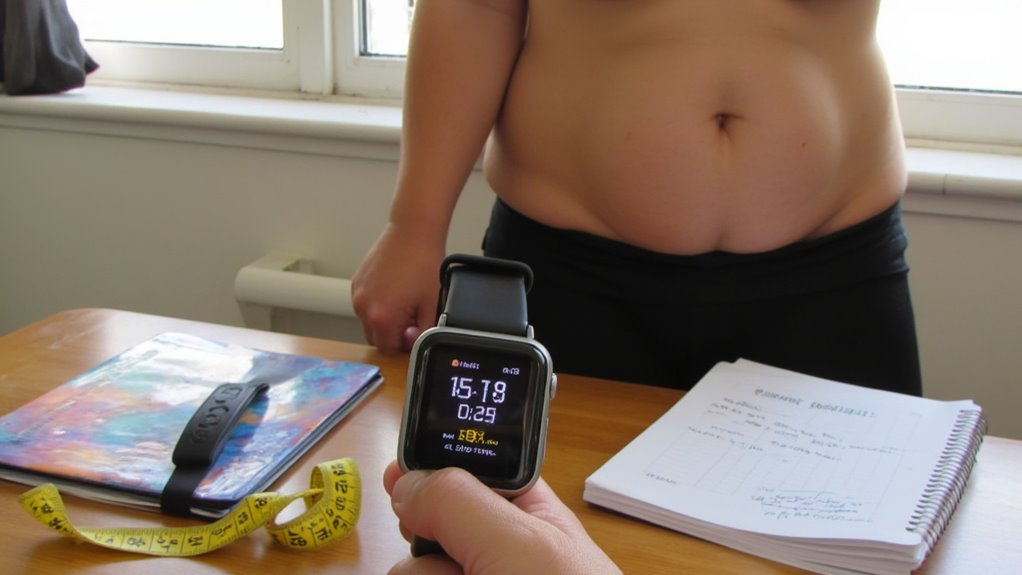
Beyond relying solely on your bathroom scale, tracking multiple indicators provides a more comprehensive picture of your body’s transformation during a fat-reduction journey.
Measuring your waist circumference regularly—ideally keeping women under 35 inches and men under 40 inches—offers direct insight into visceral fat changes. “Progress photos capture visual evidence that weight measurements miss,” notes fitness experts, particularly valuable when body composition improves while weight remains static.
Monitor how your running performance evolves by maintaining a detailed running log of distance, pace, and frequency. Improvements in energy levels and overall fitness—like completing your usual route faster or with less fatigue—signal positive physiological adaptations that correspond with fat loss.
Consistent running can help reduce visceral fat, which is a type of “active fat” that secretes hormones and impacts overall health.
Frequent Questions and Answers
How Long Should I Run to Lose Stomach Fat?
You’ll need to run a million miles to see results! Aim for 30-60 minutes of varied intensity levels 4-5 times weekly, boosting your metabolic rate while maintaining workout consistency and proper nutrition for ideal fat loss.
Will Running Flatten My Stomach?
Running can flatten your stomach through consistent cardio workouts that boost metabolism. Combine it with stomach exercises and proper diet for ideal weight loss and improved body composition in your fitness routines.
What Exercise Burns the Most Stomach Fat?
High intensity interval training burns the most stomach fat. Combine HIIT with core strengthening exercises, strength training benefits, and smart diet and nutrition while monitoring fat burning zones to boost metabolism and transform your body composition.
Can Running 30 Minutes a Day Help Lose Belly Fat?
Yes, running 30 minutes daily boosts your metabolism, burns calories and improves cardiovascular health. For ideal fat loss results, maintain exercise consistency and balance your nutrition while pursuing your fitness goals.