


This content is for informational purposes only, not medical advice, and may include affiliate links. We may earn a commission at no extra cost to you. See our Disclaimer for details.
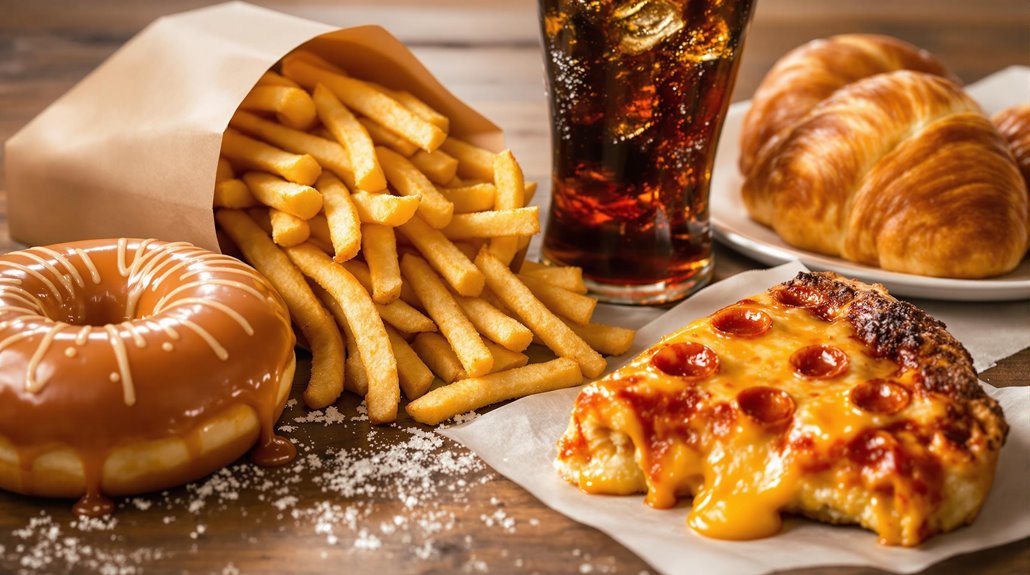
Your battle against stubborn belly fat begins with understanding which foods sabotage your efforts. When you consume certain items—particularly those high in refined sugars, trans fats, and processed carbohydrates—you’re fundamentally programming your body to store visceral fat around your abdomen. As stated by Dr. Robert Lustig, endocrinologist at UCSF, “Fructose specifically targets fat deposition in the liver and abdomen, creating the dangerous metabolic syndrome that drives chronic disease.” Wondering which everyday foods might be silently expanding your waistline? Here are some belly fat foods to avoid.
In a Nutshell
- Sugary beverages contain 150-250+ empty calories per serving and disrupt healthy eating patterns, contributing to increased belly fat.
- Processed foods and packaged snacks are low in fiber but high in unhealthy fats, leading to weight gain particularly in the abdominal area.
- Refined carbohydrates like white bread and pastries cause insulin spikes, minimal satiety, and are linked to increased abdominal fat.
- Trans fat-laden fried foods (300-600 calories per serving) promote inflammation and significantly increase waist size.
- Fatty cuts of meat and processed meats contain high saturated fat, negatively affecting metabolic health and promoting belly fat accumulation.
1. Sugary Beverages and Hidden Liquid Calories
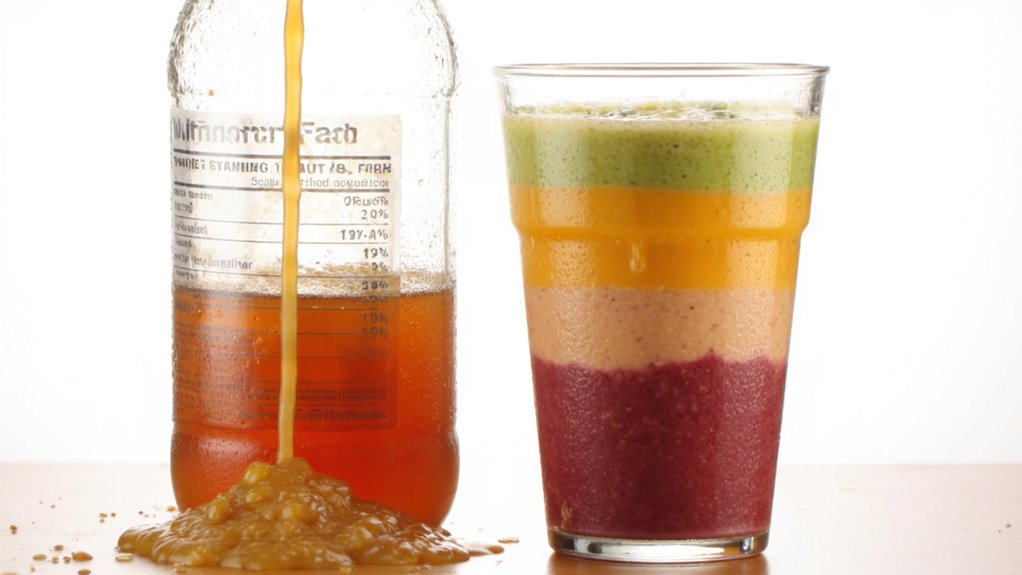
When you reach for that seemingly innocent bottle of soda, you’re actually consuming a significant contributor to stubborn belly fat that’s hiding in plain sight.
A standard 20-ounce bottle delivers approximately 250 empty calories, contributing substantially to your daily calorie needs without promoting satiety.
These hidden liquid calories, whether from regular sodas, beers (150 calories per can), or fruity cocktails like Bacontinis (284 calories each), directly impact visceral fat accumulation.
Liquid calories lurk everywhere, silently feeding your belly fat while your taste buds celebrate.
“Even beverages labeled as ‘diet’ can disrupt healthy eating patterns,” nutritionists warn.
For improved health benefits, replace these high sugar options with water or naturally-infused alternatives to effectively manage weight gain.
Additionally, consuming 2-3 liters of water daily can help combat bloating and aid digestion, supporting your efforts to achieve a flat stomach.
2. Processed Fast Food and Packaged Snacks

Although many people turn to processed fast foods and packaged snacks for convenience, these dietary choices represent considerable contributors to stubborn belly fat accumulation.
A single cheeseburger can exceed 1,000 calories with 75 grams of unhealthy fats, while just 15 potato chips contain approximately 160 calories—not including calorie-dense dips.
“The combination of high calorie density and low nutrient value in processed foods creates the perfect storm for abdominal weight gain,” nutrition researchers note.
Fast food meals featuring large fries paired with burgers deliver an excessive calorie load, while packaged snacks with added sugars reduce satiety, making weight management considerably more challenging.
3. Refined Carbohydrates and White Flour Products

Refined carbohydrates and white flour products represent some of the most problematic dietary contributors to stubborn belly fat, as they’ve been stripped of their fiber and nutritional value during processing.
These “empty calories” trigger rapid blood sugar spikes, promoting inflammation and disrupting gut health. White bread, pastries, and refined carbs contain added sugars that increase cravings, making it nearly impossible to maintain caloric control.
Research shows consuming refined carbohydrates considerably increases your risk of accumulating abdominal fat compared to whole grain alternatives. White flour products offer minimal satiety, leading to overeating episodes that sabotage weight loss efforts.
Substituting with higher fiber content whole grains like barley and brown rice effectively reduces belly fat. Incorporating soluble fiber from oats and legumes can further aid in reducing belly fat by promoting satiety and stabilizing blood sugar levels.
4. Trans Fat-Laden Foods and Fried Items

Trans fats represent perhaps the most dangerous dietary culprit in the battle against stubborn belly fat, surpassing even the negative impacts of refined carbohydrates. You’ll find these insidious compounds lurking in processed foods and partially hydrogenated oils, where they trigger inflammation and directly contribute to abdominal fat accumulation.
| Food Type | Calories Per Serving | Impact on Waist |
|---|---|---|
| French Fries | 365-600 | Significant increase |
| Fried Chicken | 320-400 | Moderate increase |
| Donuts | 250-350 | Substantial increase |
| Deep-fried Snacks | 300-450 | Severe impact |
Switching to baking or grilling methods can dramatically improve your dietary quality and weight management outcomes while reducing unhealthy fat consumption.
5. Alcoholic Drinks and Their Impact on Waistlines
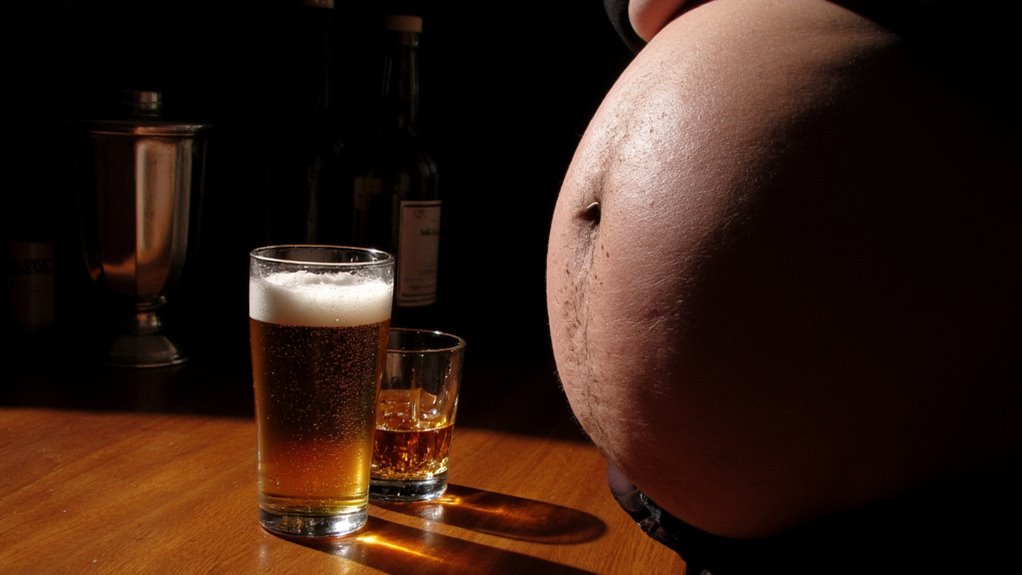
While many dieters meticulously count food calories, alcoholic beverages often fly under the radar despite their significant impact on abdominal fat accumulation.
Your body processes alcohol differently than other nutrients, prioritizing its metabolism at the expense of burning fat.
Alcohol hijacks your metabolic priorities, forcing your body to burn booze while fat accumulates unchecked.
- A standard 12-ounce beer contains approximately 150 calories, while a 5-ounce glass of red wine adds about 125 calories to your daily intake.
- Alcohol stimulates insulin secretion, promoting fat storage specifically in the abdominal region.
- Cocktails with sugary mixers dramatically increase caloric content, exacerbating weight gain concerns.
- Moderation—one daily drink for women, two for men—helps minimize alcohol’s waistline impact.
6. High-Calorie Desserts and Baked Goods

Just as alcoholic beverages can sabotage your waistline, the dessert menu presents another significant challenge for those working to reduce belly fat. A single glazed doughnut contains 260 calories, with a dozen totaling 3,120 calories—a substantial contributor to excess calorie consumption.
High-calorie desserts, laden with refined sugars and unhealthy fats, reduce satiety signals, leading to overeating and abdominal fat accumulation. “Trans fats in baked goods are particularly problematic, as they’re directly linked to increased visceral fat storage,” notes nutritionists.
To effectively combat belly fat, consider incorporating High-Intensity Interval Training, which boosts metabolic rate and aids in reducing stubborn fat. You’ll want to scrutinize ingredient labels carefully and practice moderation to protect your weight loss efforts from these tempting but problematic treats.
7. Breakfast Traps to Avoid on Your Weight Loss Journey

Many breakfast options commonly perceived as healthy can actually undermine your weight loss goals, especially regarding reducing stubborn belly fat.
“The morning meal sets your metabolic tone for the entire day, making breakfast choices particularly consequential for weight management,” explains Dr.
- Sugary cereals – Despite health-focused marketing, these products often contain 10-15g of added sugar per serving, triggering insulin spikes that promote fat storage.
- Store-bought juices and smoothies – These liquid calories lack satisfying fiber while delivering concentrated sugar content that sabotages weight loss efforts.
- White flour baked goods – Refined grains rapidly convert to glucose, elevating insulin and promoting abdominal adiposity.
- Breakfast sandwiches – These calorie-dense options can exceed 500 calories without providing adequate nutritional value.
Incorporating mindful eating habits into your morning routine can help reduce impulsive food consumption and aid in effective weight management.
8. Unexpected Sources of Belly-Bloating Ingredients

Surprising culprits lurk in seemingly innocent foods, sabotaging your belly-fat reduction efforts without your knowledge. Many products marketed as “healthy” contain high levels of sodium and unhealthy additives that promote water retention and a distended belly appearance. One effective strategy is incorporating apple cider vinegar into your diet, as its acetic acid content can suppress appetite and improve visceral fat reduction.
| Hidden Bloat Triggers | Impact on Your Body |
|---|---|
| Artificial sweeteners | Disrupt gut bacteria, causing digestive distress |
| “Sugar-free” products | Often contain sorbitol that ferments in intestines |
| Low-fat dressings | Compensate with sodium and corn syrup |
| Plant-based milks | May include thickeners that slow digestion |
You’ll want to scrutinize ingredients carefully, especially in processed foods and carbonated beverages, where carbon dioxide creates immediate bloating. For lactose-sensitive individuals, dairy products require particular attention.
Healthier Alternatives for Sustainable Fat Loss
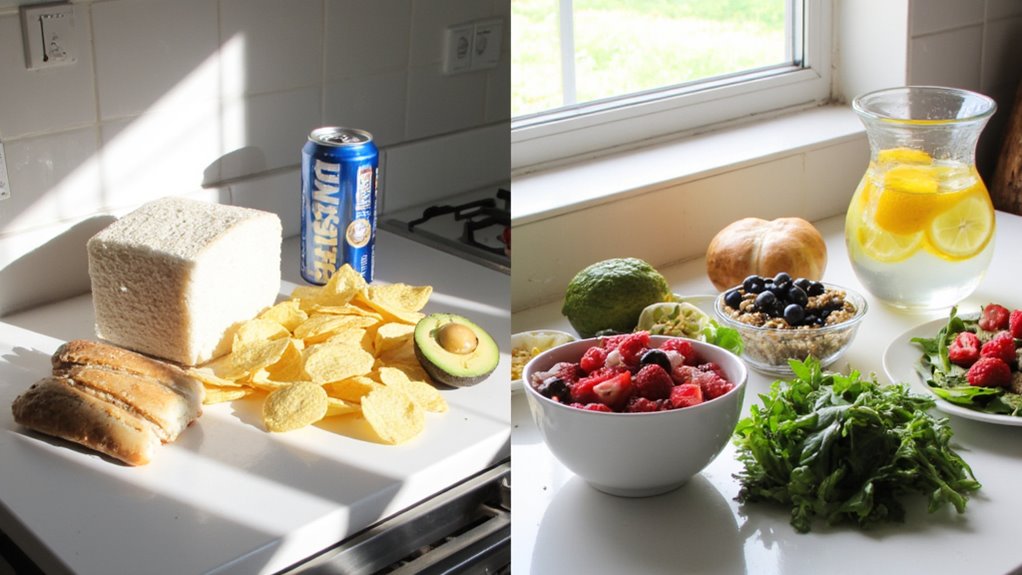
While knowing what to avoid helps identify dietary pitfalls, implementing sustainable alternatives creates the foundation for long-term belly fat reduction. Research indicates that strategic food substitutions can considerably impact abdominal adiposity, providing both fiber and nutrients essential for metabolic health.
- Replace refined carbohydrates with whole grains like quinoa or brown rice, which contain fiber that slows digestion and reduces insulin spikes.
- Substitute fatty cuts of meat with lean protein sources such as chicken breast or legumes.
- Swap sugary beverages for water infused with fresh fruit or unsweetened herbal teas.
- Trade high-calorie snacks for nutrient-dense alternatives like Greek yogurt with berries.
- Breastfeeding can burn an additional 300-500 calories each day, further aiding in weight loss efforts for new mothers.
Frequent Questions and Answers on Belly Fat Foods to Avoid
What Foods Are Good for Losing Belly Fat?
Focus on high fiber foods, protein sources, and whole grains. Choose healthy snacks like fruits, practice portion control, and don’t forget hydration importance. Low sugar options and smart cooking methods maximize your results.
How Can I Reduce My Tummy in 7 Days?
You’ll need a balanced approach: consistent exercise routines, proper hydration, meal prepping with portion control, mindful eating, stress management, quality sleep, home workouts, intermittent fasting, and smart snack alternatives.
Which Foods Increase Belly Fat?
You’re accumulating belly fat through processed sugars, trans fats, refined carbs, sugary drinks, fast food, high-calorie snacks, white bread, fried foods, alcohol consumption, and high fructose corn syrup. Break free from these dietary chains.
What Foods Should I Avoid to Lose Tummy Fat?
You’ll lose tummy fat faster by avoiding processed sugars, high fat meats, refined grains, sugary beverages, trans fats, fast food, full fat dairy, diet sodas, bread products and excessive alcohol.