


This content is for informational purposes only, not medical advice, and may include affiliate links. We may earn a commission at no extra cost to you. See our Disclaimer for details.
The idea that running always outperforms walking for belly fat loss isn’t as straightforward as you might think. Research suggests both activities target visceral fat through distinct metabolic pathways, each providing measurable advantages depending on your body’s response. Dr. Jason Gill of the University of Glasgow notes, “Walking is considerably underrated as a fat-loss tool.” What truly separates these two approaches involves your hormones, calorie deficit, and exercise consistency—factors that could reshape your entire strategy.
In a Nutshell
- Running burns approximately twice the calories per mile compared to walking, providing greater metabolic freedom for faster belly fat loss.
- Walking operates within the fat-oxidation zone (60–70% max heart rate), effectively burning stored fat while maintaining stable cortisol levels.
- Running produces an afterburn effect (EPOC) approximately 7% higher than walking, elevating energy expenditure for up to 24 hours post-exercise.
- Consistency matters more than intensity, as sustainable moderate activity often outperforms aggressive training for long-term visceral fat reduction.
- Diet accounts for roughly 80% of body composition outcomes, making nutrition essential regardless of whether you walk or run.
What the Research Actually Says About Walking, Running, and Belly Fat
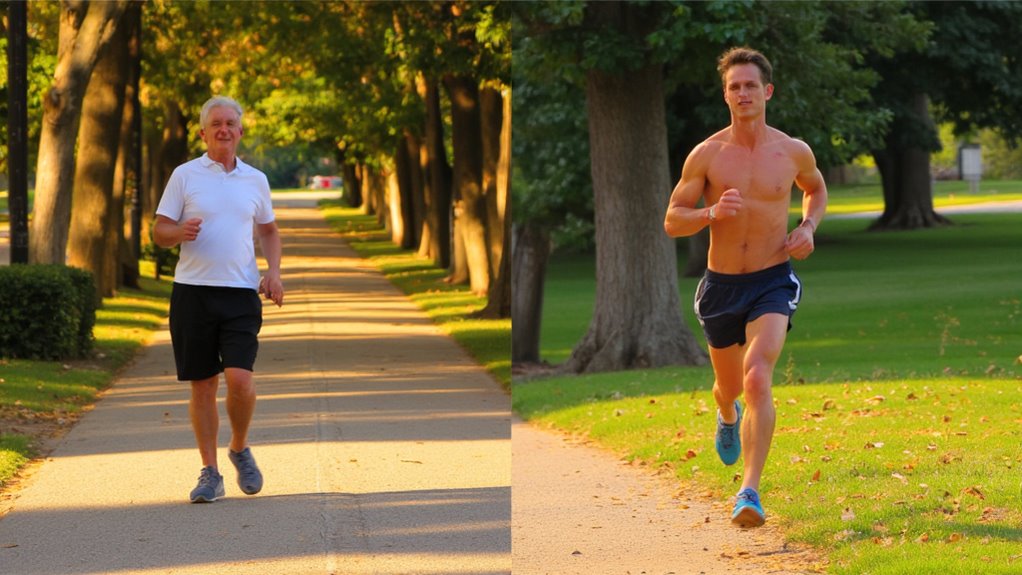
Both walking and running reduce visceral fat — the dangerous, deep abdominal fat surrounding your organs — but they do so through different mechanisms and at different rates.
Research confirms that exercise types greatly influence fat distribution, metabolism factors, and overall body composition. Running burns roughly twice the calories per mile compared to walking, accelerating energy expenditure substantially.
However, workout consistency matters more than intensity alone, since lifestyle changes sustained over months produce superior hormonal effects.
Age differences and fitness preferences also shape outcomes, meaning your ideal approach depends entirely on what you’ll actually maintain long-term.
Additionally, running helps reduce elevated cortisol levels linked to belly fat storage, enhancing the effectiveness of fat loss efforts.
How Belly Fat Gets Burned During Exercise

Burning belly fat during exercise isn’t as simple as “abs feel warm, so fat is melting” — your body follows a precise, hormonally driven process that determines where and when stored fat gets mobilized.
Your hormonal response to movement triggers lipolysis, releasing fatty acids into your bloodstream for fat oxidation. Exercise duration, intensity levels, and energy expenditure collectively influence how efficiently your metabolism burns visceral fat.
Elevated metabolic rate persists post-exercise, improving body composition over time. Lifestyle factors like stress management and movement variety amplify these effects, giving you genuine physiological freedom from stubborn abdominal fat accumulation.
Incorporating high-intensity interval training can enhance fat-burning efforts by boosting metabolism and promoting overall wellness.
Walking vs. Running: The Calorie Burn Breakdown

Once you understand how your body mobilizes fat during exercise, the next logical question is which activity — walking or running — actually burns more calories and, more importantly, more belly fat. The calorie comparison below highlights exercise efficiency differences clearly.
| Activity | Calories Burned (30 min/155 lbs) |
|---|---|
| Brisk Walking | ~150 calories |
| Moderate Running | ~300 calories |
| Interval Walking | ~200 calories |
| Interval Running | ~400 calories |
Running burns considerably more calories per session, giving you greater metabolic freedom through higher intensity output. Incorporating High-Intensity Interval Training (HIIT) sessions on the treadmill can enhance your calorie burn, boosting fat loss efforts.
Does Running Burn More Belly Fat Than Walking?

While running clearly burns more calories per session, the relationship between exercise intensity and belly fat reduction is more nuanced than raw calorie numbers suggest.
Research published in the *Journal of Obesity* indicates that high-intensity exercise, like running, triggers elevated cortisol levels, which can paradoxically promote abdominal fat retention.
Your fat loss strategies should thus align with your exercise preferences and stress tolerance.
Walking, surprisingly, keeps cortisol manageable while still mobilizing visceral fat effectively.
As stated by exercise physiologist Dr. Carl Foster, “Sustainable moderate activity often outperforms aggressive training for long-term body composition improvements,” giving you flexibility in choosing your approach.
Incorporating compound exercises into your routine can further enhance fat loss and muscle preservation by engaging multiple muscle groups.
The Fat-Burning Zone: Myth or Real Advantage?
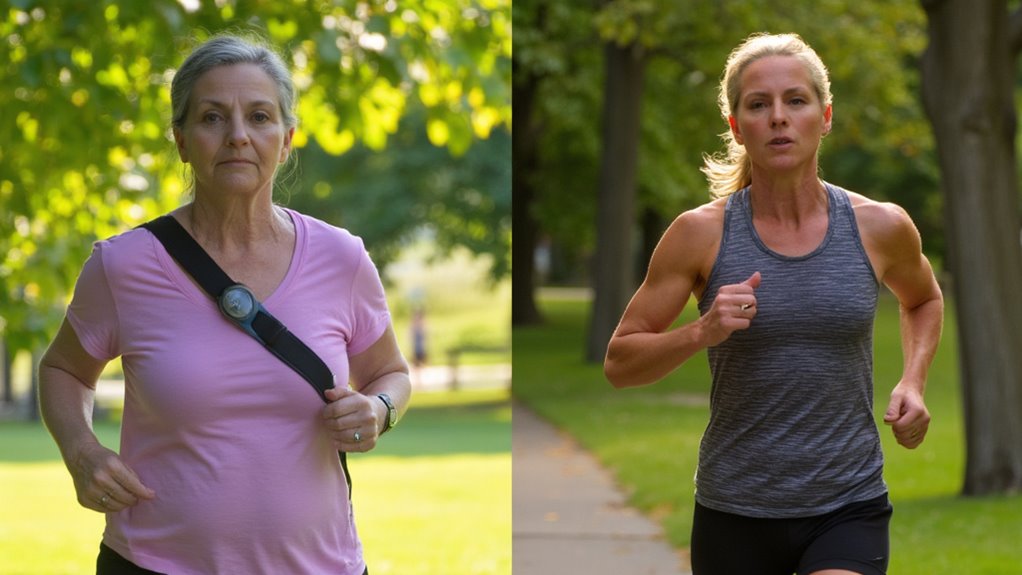
The fat-burning zone, typically defined as exercising at 60–70% of your maximum heart rate, has long been marketed as the ideal intensity for stripping away body fat, but the science behind it’s more layered than fitness marketing suggests.
The fat-burning zone sounds convincing, but the science tells a more complicated story than gym posters suggest.
At lower intensities, your body does preferentially use fat as fuel, making walking seem advantageous in this fat burning debate.
However, higher exercise intensity burns more total calories overall, which ultimately drives greater fat loss.
Research confirms that total caloric deficit matters more than fuel source, meaning you’re not locked into one approach to achieve meaningful, sustainable results.
To effectively reduce belly fat, focus on creating a sustainable caloric deficit through balanced nutrition and consistent exercise.
Why Intensity Matters More Than You Think
Intensity shapes your results far more noticeably than most fitness programs acknowledge, influencing not just calorie burn during exercise, but the metabolic response that follows.
Higher intensity levels trigger excess post-exercise oxygen consumption (EPOC), elevating your metabolism for hours afterward. Research published in the *Journal of Strength and Conditioning* confirms that vigorous activity produces considerably greater EPOC than moderate effort.
Shorter workout duration at high intensity can thus outperform longer, gentler sessions metabolically. As exercise physiologist Dr. Martin Gibala notes, “intensity manipulates hormonal and enzymatic responses that directly govern fat oxidation,” giving you genuine control over your body’s fat-burning potential.
Incorporating high-intensity standing cardio can target visceral fat effectively, offering additional benefits such as improved cardiovascular health and increased insulin sensitivity.
The Afterburn Effect: How Running Keeps Burning Belly Fat

Running’s greatest metabolic advantage isn’t the calories you burn during the workout itself, but rather what happens to your body in the hours that follow.
This phenomenon, called the afterburn effect, or excess post-exercise oxygen consumption (EPOC), considerably elevates your energy expenditure for up to 24 hours post-run.
Research published in the *Journal of Sports Science* confirms that running produces a metabolic boost roughly 7% higher than walking.
Research confirms running delivers a metabolic boost 7% greater than walking, accelerating fat loss long after your workout ends.
You’re fundamentally burning belly fat while resting, which gives you remarkable freedom from constant exercise.
These recovery benefits make running a uniquely efficient, time-conscious strategy for targeting stubborn abdominal fat.
Additionally, combining running with resistance training can further enhance visceral fat reduction, making it a comprehensive approach to fat loss.
How Running Too Hard Can Raise Cortisol and Stall Belly Fat Loss
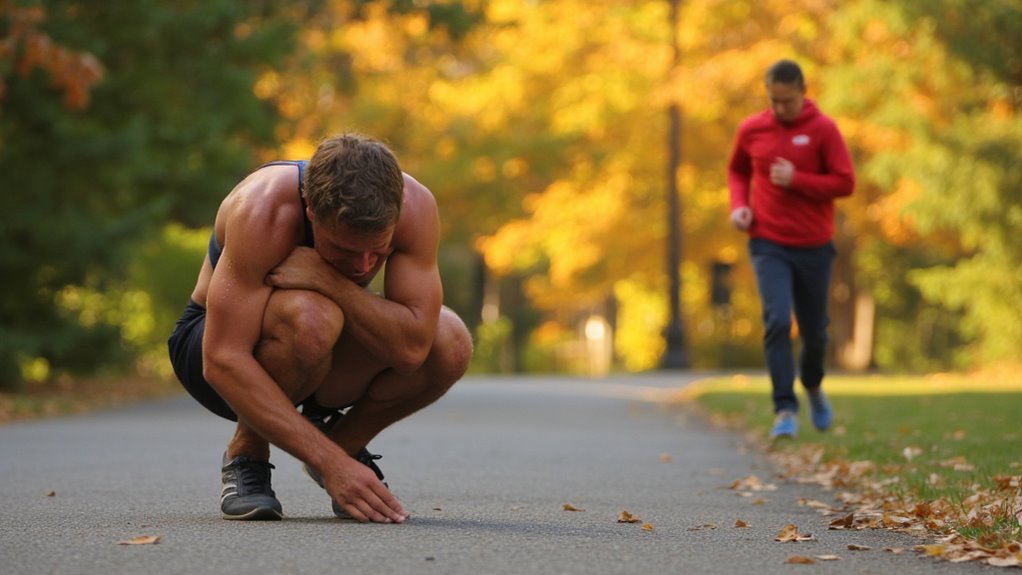
While running delivers impressive fat-burning benefits, pushing too hard too often triggers a hormonal response that can actually work against your belly fat goals. Chronically elevated cortisol levels, caused by excessive workout intensity, signal your body to store fat, particularly around your abdomen. Research shows cortisol rises considerably after high-intensity runs exceeding 60 minutes.
Proper recovery time between sessions is essential for managing this hormonal impact. Dr. Shawn Talbott notes, “Exercise balance matters more than raw intensity.”
Smart stress management means scheduling rest days, monitoring effort levels, and choosing moderate runs that burn fat without triggering counterproductive hormonal responses. Additionally, visceral fat acts as an active endocrine organ, complicating weight loss efforts.
Why Walking Beats Running for Sustainable Belly Fat Loss
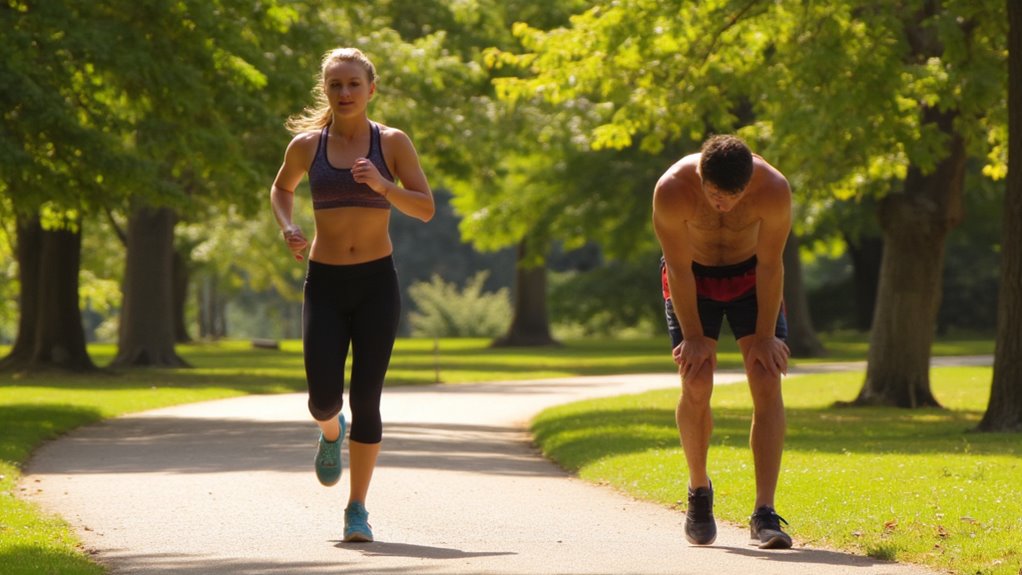
Despite running’s reputation as the superior fat-burning exercise, walking actually offers distinct metabolic advantages that make it more sustainable for long-term belly fat reduction.
Walking benefits include operating primarily within your fat-oxidation zone, approximately 60-70% of maximum heart rate, where your body preferentially burns stored fat over glycogen.
Research published in the *Journal of Exercise Nutrition & Biochemistry* confirms that consistent, moderate-intensity walking reduces visceral adipose tissue more effectively over time.
You’ll find that building sustainable habits around daily walking keeps cortisol levels stable, preserving your metabolic freedom without triggering the hormonal disruptions that aggressive running often causes.
Additionally, hormonal changes such as increased cortisol from stress are better managed through walking, which can help in reducing abdominal fat over time.
How Long You Need to Walk or Run to Lose Belly Fat
Everything depends on duration, intensity, and consistency in relation to actually shifting visceral fat through walking or running.
Research indicates you’ll need 150–300 minutes of moderate-intensity walking duration weekly, targeting 60–70% of your maximum heart rate, to meaningfully reduce abdominal fat.
Running intensity accelerates caloric expenditure considerably, requiring only 75–150 minutes weekly at 70–85% maximum heart rate for comparable results.
Dr. Vivian Fonseca notes, “Sustained aerobic activity directly reduces visceral adipose tissue over 8–12 weeks.”
You’re not locked into one approach; combining both modalities strategically gives you flexibility while maximizing fat oxidation and metabolic adaptation simultaneously.
Incorporating soluble fiber from fruits and legumes can complement your exercise routine by reducing abdominal fat by 3.7% over time.
Which Burns More Belly Fat: Daily Walks or Weekly Runs?

How you structure your exercise week matters more than most people realize, since daily moderate walks and concentrated weekly runs produce measurably different physiological outcomes for visceral fat reduction. Your walking duration, running intensity, exercise frequency, and calorie deficit all interact, influencing your metabolic rate considerably.
| Factor | Daily Walks vs. Weekly Runs |
|---|---|
| Calorie Burn | Walks accumulate steadily |
| Metabolic Rate | Runs elevate it longer |
| Lifestyle Changes | Walks integrate more easily |
Fitness variety and personal preference ultimately determine sustainability, since consistent moderate movement outperforms sporadic intense sessions for long-term belly fat loss.
How to Combine Walking and Running for Faster Belly Fat Loss

Combining walking and running into a structured weekly routine accelerates visceral fat loss more effectively than either exercise performed in isolation, as stated by research published in the *Journal of Obesity*.
You’ll want to incorporate interval training, alternating between brisk walking and moderate running, to keep your heart rate within the fat-burning zone of 60–70% maximum capacity.
Schedule recovery days strategically, allowing muscles to repair while maintaining consistency toward your fitness goals.
Workout variety prevents metabolic adaptation, sustaining caloric deficit over time.
Prioritize exercise enjoyment by choosing routes and pacing that feel liberating, ensuring long-term adherence to your personalized program.
Why Diet Determines How Much Belly Fat You Actually Lose

Although exercise accelerates visceral fat reduction, your diet ultimately determines how much belly fat you’ll actually lose, since you can’t outrun a poor nutritional strategy.
Your dietary habits, including food quality, portion control, and meal planning, directly influence your caloric deficit, which research confirms must reach approximately 3,500 calories weekly per pound lost.
Prioritizing nutrient timing, hydration strategies, and stress management greatly impacts your metabolic rate, allowing fat oxidation to work efficiently.
Lifestyle factors compound these effects considerably.
As registered dietitian Dr. Shawn Talbott notes, “Nutrition accounts for roughly 80% of body composition outcomes, making dietary choices your most powerful fat-loss tool.”
Which Option Fits Your Fitness Level and Belly Fat Goals?

Regardless of if you’re a beginner managing joint pain or an experienced exerciser chasing aggressive fat-loss targets, your current fitness level should directly shape which cardio method you prioritize.
| Factor | Walking | Running |
|---|---|---|
| Injury Consideration | Low joint stress | Higher impact risk |
| Time Commitment | 45–60 min sessions | 20–30 min sessions |
| Enjoyment Factor | Sustainable, relaxed | Intense, rewarding |
| Goal Alignment | Gradual fat loss | Accelerated results |
| Lifestyle Compatibility | Fits any schedule | Requires recovery days |
Your fitness assessment, personal preference, and motivation strategies determine long-term success more than intensity alone ever will.
Frequent Questions and Answers
Can Belly Fat Loss Be Targeted Through Specific Walking or Running Routes?
You can’t target belly fat through specific routes, but you’ll accelerate loss by embracing route variety, terrain challenges, intensity levels, and duration differences—freeing your body to burn fat more efficiently overall.
Does Walking or Running on an Empty Stomach Burn More Belly Fat?
Like a ship sailing on empty seas, fasted cardio unlocks your body’s fat stores. You’ll experience powerful metabolic effects that target belly fat regardless of if you’re walking or running before breakfast.
How Does Age Affect Belly Fat Loss From Walking Versus Running?
As you age, metabolism changes slow belly fat loss, making exercise intensity more critical. You’ll need to push harder with running or walk longer to overcome your body’s natural resistance to shedding belly fat.
Can Walking or Running in Cold Weather Speed up Belly Fat Loss?
Exercising in cold weather can give you a metabolism boost, helping you burn more belly fat. You’ll enjoy cold weather benefits as your body works harder to stay warm, regardless of if you’re walking or running freely outdoors.
Does Running Surface Type Impact How Much Belly Fat You Lose?
The surface you run on doesn’t greatly impact belly fat loss, but treadmill vs outdoors choices matter for consistency. You’ll unlock incline benefits by tackling hills or adjusting treadmill settings, boosting calorie burn and accelerating fat loss.