
This content is for informational purposes only, not medical advice, and may include affiliate links. We may earn a commission at no extra cost to you. See our Disclaimer for details.
When you’re concerned about body fat, it’s crucial to understand that not all adipose tissue poses equal risk. Visceral fat, unlike the subcutaneous fat you can pinch, wraps around your critical organs deep within your abdominal cavity, potentially triggering systemic inflammation and metabolic disruption. “Visceral adiposity functions fundamentally as an endocrine organ, secreting hormones and cytokines that can markedly alter your health,” explains Dr. Elizabeth Ross, endocrinologist at Harvard Medical School. Identifying this hidden health threat requires specific measurements and awareness of subtle warning signs.
In a Nutshell
- Measure your waist circumference; over 35 inches (women) or 40 inches (men) indicates likely visceral fat presence.
- Calculate your waist-to-hip ratio; readings above 0.85 (women) or 0.90 (men) suggest excess visceral fat.
- Check your body shape; an apple-shaped physique with belly prominence signals potential visceral fat accumulation.
- Assess your waist-to-height ratio; a value exceeding 0.5 suggests unhealthy levels of visceral fat.
- Consider persistent fatigue and elevated stress levels as non-visual indicators of possible visceral fat presence.
What Exactly Is Visceral Fat and Why Does It Matter?
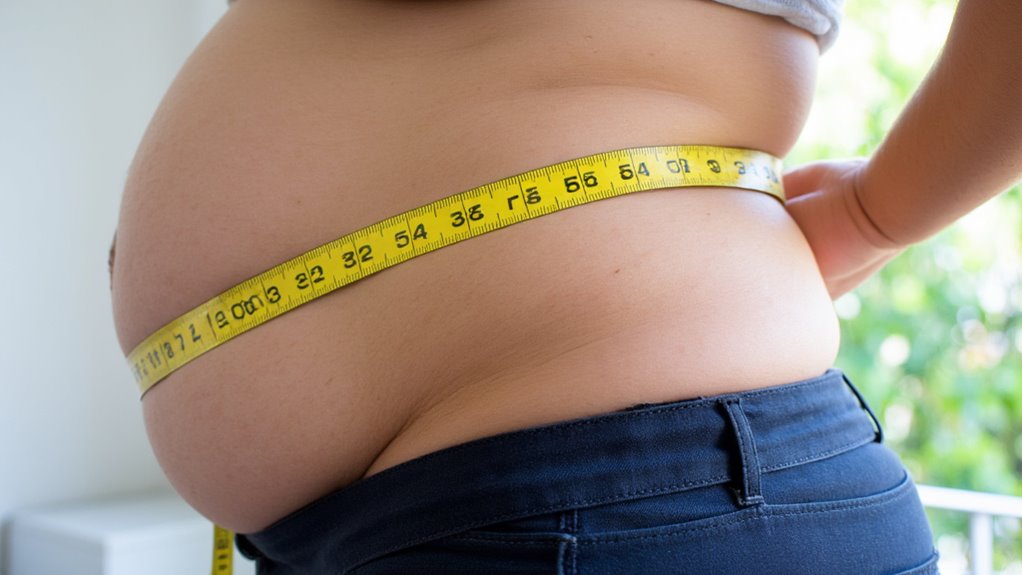
Visceral fat, often hidden from plain sight, represents a unique and potentially dangerous form of adipose tissue that demands our attention beyond aesthetic concerns.
Unlike subcutaneous fat that lies just beneath your skin, visceral fat wraps around your abdominal organs, comprising approximately 10% of your total body fat. Its classification as “active fat” stems from its hormone-secreting properties, which, when in excess, markedly elevate your health risks, including type 2 diabetes, cardiovascular diseases, and various types of cancers.
An apple-shaped body with elevated waist measurements or waist-to-hip ratio often signals concerning visceral fat accumulation. Hormonal fluctuations during midlife can exacerbate visceral fat storage, increasing the difficulty of maintaining a healthy weight balance.
The Key Differences Between Visceral and Subcutaneous Fat

While understanding the various types of body fat might seem complex, distinguishing between visceral and subcutaneous fat represents a crucial step in evaluating your true health risks.
Subcutaneous fat, comprising 90% of your body’s fat stores, lies just beneath your skin and can be pinched, while visceral fat surrounds your organs deep within your abdomen. This “active fat” releases inflammatory compounds that directly impact your health, contributing to heart disease and diabetes.
Lurking deep in your abdomen, “active” visceral fat releases harmful compounds—a hidden danger your pinchable subcutaneous fat doesn’t share.
Your body type offers important clues—an apple-shaped physique typically indicates higher visceral fat levels compared to pear-shaped individuals.
Measuring your waist circumference (over 35″ for women, 40″ for men) provides a reliable indicator of potential visceral fat concerns.
Hormonal changes, such as increased cortisol from stress and alterations during menopause, contribute to the persistence of belly fat, which can be indicative of higher visceral fat levels.
Common Signs That Might Indicate Excess Visceral Fat
Recognizing the physical manifestations of excess visceral fat can help you assess your health risks before medical complications develop.
The most visible indicator is a growing belly or “apple-shaped” body, particularly if your waist measurements exceed 35 inches (women) or 40 inches (men). Your waist-to-hip ratio may reveal abdominal obesity when it’s above 0.85 for women or 0.90 for men, while a body mass index over 30 suggests significant visceral fat accumulation.
Don’t overlook non-visual signs like persistent fatigue and elevated stress levels, as higher cortisol levels contribute to excess visceral fat storage.
Including soluble fiber from oats and legumes in your diet can reduce belly fat by 3.7% over five years, supporting your overall health.
“These measurements provide objective data that correlates strongly with internal fat distribution,” notes Dr. Sharma, obesity specialist.
Measuring Methods: From Simple At-Home Tests to Medical Assessments
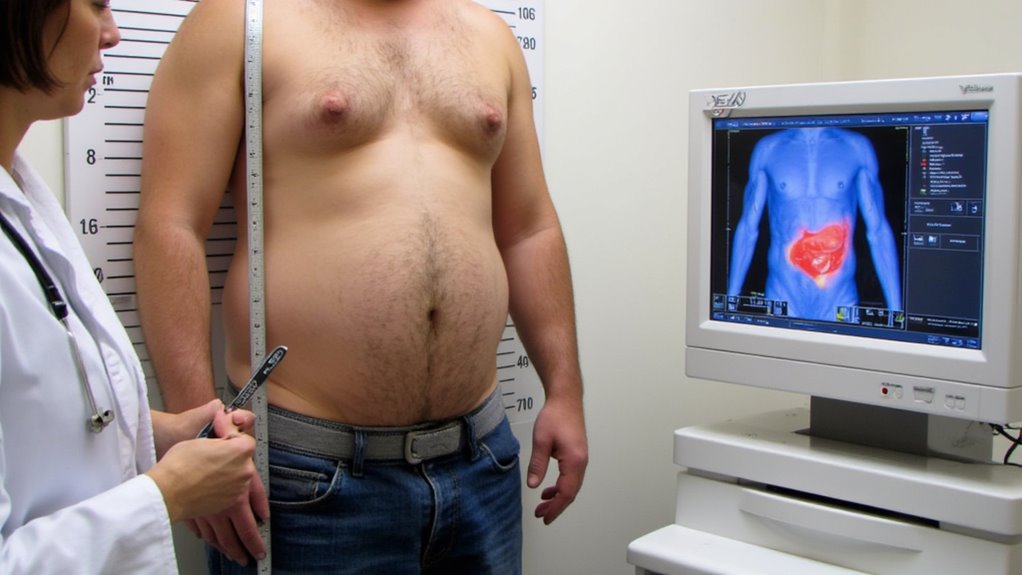
Accurately measuring your visceral fat levels requires a strategic approach, ranging from simple tape measurements at home to sophisticated medical imaging techniques in clinical settings. Start with waist measurement—a circumference exceeding 35 inches for women or 40 inches for men indicates elevated health risks.
Calculate your waist-to-hip ratio (unhealthy when above 0.85 for women, 0.90 for men) and waist-height ratio (should not exceed 0.5).
While these home methods provide valuable insights, CT scans and MRIs offer definitive medical assessments of body fat distribution around organs.
Remember that profuse sweating primarily leads to temporary weight loss from water, not a reduction in visceral fat.
Health Risks Associated With High Levels of Visceral Fat
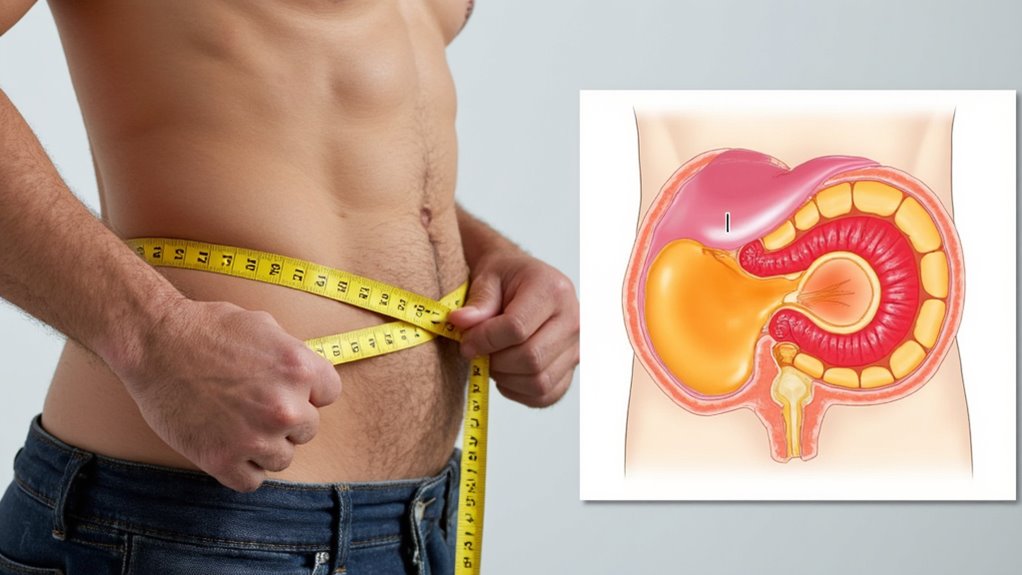
Beneath the surface of your abdomen, visceral fat silently accumulates and wreaks havoc on multiple body systems, transforming what might seem like simple weight gain into a significant health liability.
High levels of visceral fat dramatically increase your risk of metabolic diseases, particularly type 2 diabetes, by triggering insulin resistance and inflammatory processes. Your cardiovascular health suffers too—each additional 2 inches of waist size raises women’s heart disease risk by 10%.
Research indicates that abdominal fat nearly triples your dementia risk, including Alzheimer’s disease, especially when present in early adulthood.
Additionally, you’ll face increased risk of specific cancers, especially colorectal and breast cancer.
Lifestyle Factors That Contribute to Visceral Fat Accumulation

The fundamental lifestyle choices you make daily can markedly influence the accumulation of visceral fat, creating either a protective buffer against this dangerous adipose tissue or accelerating its growth around your essential organs.
Your sedentary lifestyle, characterized by prolonged inactivity, directly increases waist circumference and abdominal obesity. Poor dietary choices, particularly those high in refined sugars and trans fats, exacerbate visceral fat accumulation and related metabolic disorders.
Similarly, high levels of stress elevate cortisol, promoting central fat storage, while sleep deprivation (less than 6 hours nightly) disrupts hormonal balance.
Even with genetic predisposition, these modifiable factors remain critical intervention points. Consistent yoga practice can enhance metabolism and reduce the risk of visceral fat accumulation by promoting better insulin sensitivity and stress management.
Effective Strategies to Reduce Visceral Fat
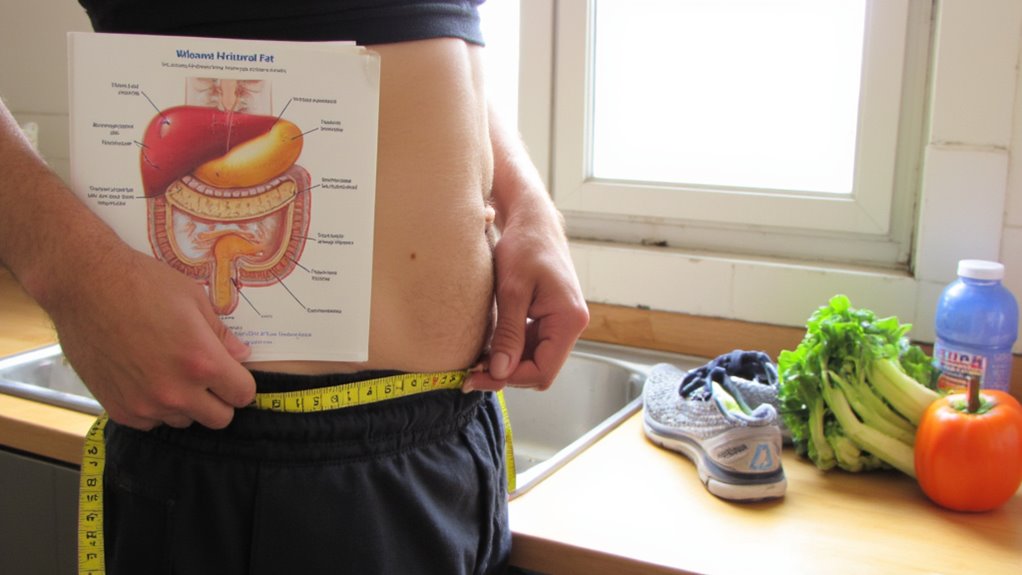
Reducing visceral fat requires a comprehensive lifestyle approach that targets the unique physiological mechanisms driving its accumulation around your essential organs. You’ll need to incorporate both exercise and dietary modifications to effectively combat this dangerous fat type. Regular aerobic exercise, targeting at least 300 minutes per week, can significantly reduce visceral fat deposits.
| Strategy | Implementation |
|---|---|
| Exercise | 30+ minutes of moderate aerobic exercise most days; strength training twice weekly |
| Balanced Diet | Focus on whole grains, lean proteins; limit trans fats, added sugars |
| Stress Management | Practice yoga, meditation to lower cortisol levels |
| Sleep Routine | Maintain 6-8 hours of quality sleep nightly |
| Consistency | Track progress with regular measurements, not just scale weight |
Frequent Questions on How to Know if You Have Visceral Fat
What Are the Signs of Visceral Fat?
You’ll recognize visceral fat by bloating, weight gain, increased waistline, body aches, fatigue, hormonal imbalance, cardiovascular issues, cravings, higher stress levels, and metabolic changes affecting your daily freedom.
How Can I Check My Visceral Fat?
Like peering beneath your skin’s surface, you can check visceral fat through waist measurements, waist-to-hip ratios, BMI calculations, specialized scales, or medical imaging tests for accurate assessment.
Do I Have Belly Fat or Visceral Fat?
You likely have both belly fat (subcutaneous) and visceral fat. Measure your waist circumference to assess fat distribution and related health risks. Your lifestyle factors, diet, and exercise impact your body composition.
Can You Be Skinny and Have Visceral Fat?
Yes, you can be thin but have hidden visceral fat, a condition called “skinny obesity.” Your waist circumference, genetic factors, and lifestyle choices affect fat distribution and health risks despite a slender appearance.