



This content is for informational purposes only, not medical advice, and may include affiliate links. We may earn a commission at no extra cost to you. See our Disclaimer for details.
You’re not imagining the connection between your thyroid health and stubborn belly fat. Research shows that hypothyroidism can reduce your metabolic rate by 30-40%, directly impacting fat distribution around your midsection. “Thyroid hormones regulate basal metabolic rate and thermogenesis, making them critical players in body composition,” explains Dr. Elizabeth Pearce, endocrinologist at Boston University. The relationship extends beyond simple calorie burning—thyroid dysfunction triggers a cascade of hormonal imbalances affecting insulin sensitivity, cortisol production, and fat storage patterns.
In a Nutshell
- Hypothyroidism slows metabolism by up to 40%, leading to increased fat storage particularly in the abdominal area.
- Thyroid dysfunction often causes insulin resistance, which impairs glucose regulation and enhances belly fat accumulation.
- Elevated cortisol levels from both hypothyroidism and hyperthyroidism promote central fat distribution around the abdomen.
- Hormone replacement therapy can restore metabolic balance and improve management of resistant abdominal weight.
- Nutritional strategies like consuming iodine-rich foods and exercise regimens support thyroid function and reduce belly fat.
The Science Behind Thyroid Hormones and Metabolism

Regarding understanding why you’re struggling to lose stubborn belly fat, your thyroid gland may hold important answers. This butterfly-shaped organ produces critical thyroid hormones (T3 and T4) that regulate your metabolism—the process converting food into energy.
“Hypothyroidism greatly reduces basal metabolic rate, decreasing calorie burning by up to 40%,” explains endocrinologist Dr. Sarah Chen. When thyroid function diminishes, your body’s energy conversion efficiency plummets, creating ideal conditions for belly fat accumulation.
This metabolic disruption often triggers a cascade of complications: insulin resistance impairs glucose management, while elevated cortisol levels—often accompanying thyroid dysfunction—further promote abdominal fat storage.
How Hypothyroidism Contributes to Stubborn Abdominal Weight
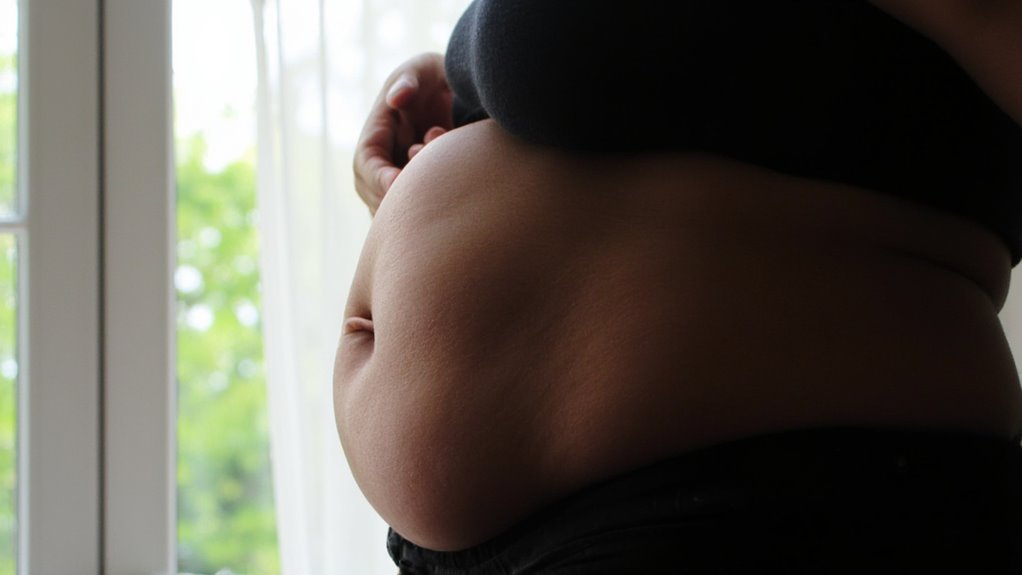
When your thyroid function diminishes, a series of metabolic changes directly impacts where your body stores fat, particularly in the abdominal region. Hypothyroidism considerably reduces your metabolism, creating biochemical conditions that favor stubborn belly fat accumulation.
| Factor | Mechanism | Impact on Abdominal Fat |
|---|---|---|
| Thyroid Hormones | Decreased T3 and T4 | Slowed metabolism, increased fat storage |
| Insulin Resistance | Impaired glucose regulation | Enhanced abdominal fat deposition |
| Cortisol Elevation | Stress hormone dysregulation | Promotes central adiposity |
| Water Retention | Fluid imbalance | Contributes to abdominal bloating |
Proper hormone replacement therapy often helps restore metabolic equilibrium, potentially reducing the stubborn abdominal weight that’s been resistant to traditional weight management approaches.
Hyperthyroidism and Its Paradoxical Effects on Body Composition

While hypothyroidism slows metabolism and promotes weight gain, hyperthyroidism presents a more complex metabolic puzzle. Surprisingly, despite the traditional understanding that hyperthyroidism increases calorie burning, you might experience paradoxical weight gain due to heightened appetite overwhelming your hyperactive metabolism.
This condition typically decreases your basal metabolic rate, affecting body composition with increased visceral fat accumulation. “Patients often develop significant hormonal imbalances that trigger belly fat redistribution, even during overall weight loss,” explains Dr. Thompson.
Elevated cortisol levels frequently exacerbate this abdominal fat accumulation. When you receive treatment for hyperthyroidism, your metabolism normalizes, potentially leading to weight gain as your body reestablishes its natural composition.
Additionally, insulin resistance can complicate weight management, as it alters fat distribution mechanisms, especially in the abdominal area.
The Role of Insulin Resistance in Thyroid-Related Weight Gain

Beyond the direct effects of thyroid hormone imbalances, insulin resistance appears as a critical mechanism in thyroid-related weight gain, particularly affecting abdominal fat distribution.
If you’re living with Hashimoto’s or Graves disease, you’re more vulnerable to this metabolic disruption, which creates a challenging cycle: elevated insulin levels promote fat storage while simultaneously reducing your body’s sensitivity to thyroid hormones.
Your glucose metabolism becomes inefficient, depleting your energy levels and making traditional weight loss approaches less effective. Hormonal changes, such as increased cortisol from stress, contribute to the persistence of belly fat, which is often the last to diminish.
Comprehensive blood testing for insulin sensitivity markers is essential for developing personalized treatment plans that address both thyroid function and metabolic health, breaking the stubborn belly fat cycle.
Nutritional Strategies for Managing Thyroid-Induced Belly Fat
Addressing the nutritional dimension of thyroid-related belly fat requires a strategic, evidence-based approach that works synergistically with proper hormone management.
You’ll find that prioritizing nutrient-dense foods, particularly those supporting thyroid hormone production, can notably impact your battle against stubborn belly fat.
Incorporate iodine-rich seafood to fuel your thyroid’s metabolic functions while balancing your plate with adequate protein intake to preserve muscle mass during metabolic slowdowns.
Antioxidant-rich foods combat the inflammation often accompanying thyroid dysfunction, while whole foods help stabilize blood sugar levels. Increasing your soluble fiber intake by 10g daily from sources like oats and legumes can help reduce belly fat by up to 3.7% over time.
Exercise Approaches That Work With Your Thyroid Condition
Finding the right exercise regimen represents a cornerstone of effective thyroid-related belly fat management, particularly as your metabolic functions may operate differently than those without thyroid conditions.
High-intensity interval training (HIIT) can markedly improve your metabolic rate and hormone sensitivity, combating the sluggish energy expenditure common in hypothyroidism.
Complement this with resistance training, which builds muscle mass that elevates your Basal Metabolic Rate, addressing weight gain challenges.
“Regular aerobic exercise notably normalizes cortisol levels, which directly impacts abdominal fat distribution,” notes thyroid specialists.
Keep in mind to start gradually—overexertion can worsen fatigue symptoms rather than alleviate them. Your thyroid condition requires personalized exercise pacing.
Additionally, incorporating soluble fiber into your diet can help in reducing abdominal fat, as it promotes satiety and aids in maintaining a caloric deficit necessary for weight management.
Medication Considerations for Optimizing Weight Management
| Medication Factor | Impact on Weight | Recommendation |
|---|---|---|
| TSH Levels | Dictates metabolic rate | Maintain 0.5-2.5 mIU/L for best results |
| Dosage Timing | Affects absorption | Take 30-60 minutes before breakfast |
| Supplement Use | Can enhance or interfere | Consult provider before combining |
| Calorie Intake | Works synergistically | Adjust based on medication response |
“Untreated hypothyroidism can sabotage even the most disciplined weight loss efforts,” notes endocrinologist Dr. Cohen. Regular medication monitoring ensures your treatment plan effectively addresses both thyroid function and weight management goals.
Lifestyle Factors That Impact Both Thyroid Function and Belly Fat

Beyond medication management, certain lifestyle factors markedly influence both thyroid function and belly fat accumulation—creating a complex interrelationship that requires comprehensive attention.
Your daily habits directly affect hormonal balance and metabolism, potentially exacerbating thyroid dysfunction or supporting peak function.
- Nutrient-dense diet addresses critical deficiencies in iodine, selenium, and zinc that, when corrected, can improve thyroid health and reduce abdominal fat storage.
- Regular physical activity enhances metabolism and supports thyroid hormone regulation.
- Effective stress management prevents cortisol elevation that disrupts thyroid function.
- Quality sleep maintains hormonal balance, while protecting against metabolic disruptions.
- Consuming soluble fiber from whole foods not only aids in reducing belly fat but also supports overall digestive health, which is crucial for optimal thyroid function.
Frequent Questions and Answers on Thyroid and Belly Fat Connection
How to Get Rid of Thyroid Belly Fat?
Perfect players prioritize proper protocols. You’ll optimize your metabolic rate through thyroid medication, make diet adjustments, incorporate exercise routines, manage stress, and correct nutrient deficiencies to overcome hormonal imbalance and transform your body composition.
What Is the One Thing You Should Be Eating for Your Thyroid Every Morning?
You should start your morning routine with Brazil nuts for thyroid health—they’re packed with selenium that boosts metabolism, optimizes hormone balance, and fights chronic inflammation while promoting nutrient absorption from other superfoods you’ll enjoy.
Will I Lose Weight Once I Start Taking Thyroid Medication?
Nearly 10% of patients experience weight loss after starting thyroid medication. You’ll likely see gradual results as hormone balance improves your metabolism boost, but long-term results depend on your diet impact and exercise routine.
What Is a 3pm Crash in Hypothyroidism?
Your 3pm crash comes from hormone imbalance slowing metabolism and dropping energy levels. This afternoon fatigue worsens with stress impact, poor adrenal function, and blood sugar fluctuations. Nutrition and lifestyle changes can free you.