This content is for informational purposes only, not medical advice, and may include affiliate links. We may earn a commission at no extra cost to you. See our Disclaimer for details.
Your liver—the tireless chemical factory that processes everything you consume—may be silently suffering under the weight of your expanding waistline. Learn about Liver Health and Stomach Fat. That extra padding around your midsection isn’t merely a cosmetic concern; it’s actively communicating with your liver through inflammatory signals and metabolic disruptions. As visceral fat accumulates, your liver’s ability to function properly diminishes, creating a dangerous cycle that affects nearly 25% of Americans with nonalcoholic fatty liver disease. What happens when this essential relationship between your abdominal fat and liver health reaches its breaking point?
In a Nutshell
- Excess visceral fat strongly correlates with nonalcoholic fatty liver disease (NAFLD), affecting about 24% of American adults.
- Waist measurements exceeding 40 inches in men or 35 inches in women significantly increase liver disease risk.
- Abdominal fat triggers inflammatory pathways that directly impair liver metabolism and function.
- Targeted weight loss through Mediterranean diet and 150+ minutes of weekly exercise can reverse early liver damage.
- Regular liver function screening is crucial for those with central obesity or metabolic syndrome symptoms.
Understanding the Connection Between Stomach Fat and Liver Disease

When you notice your waistline expanding beyond what feels comfortable, you’re not just witnessing a cosmetic change but potentially observing an important warning sign for your liver’s health. Visceral fat, particularly around your midsection, directly correlates with nonalcoholic fatty liver disease, affecting approximately 24% of American adults. Your body mass index and waist circumference—40+ inches for men, 35+ for women—serve as critical indicators of risk. “The relationship between central obesity and liver pathology is undeniable,” notes hepatologists. While visceral fat tends to be stubborn due to its composition of visceral fat, it is important to address it to improve liver health. Fortunately, lifestyle factors remain within your control; targeted weight loss through dietary changes can reverse damage, restoring liver function and metabolic health.
The Role of Visceral Fat in Nonalcoholic Fatty Liver Disease

Three distinct mechanisms connect visceral fat directly to the development and progression of nonalcoholic fatty liver disease (NAFLD). Your body mass index (BMI) above 27 markedly elevates NAFLD risk, with visceral fat around internal organs, not subcutaneous fat, being the primary culprit. “When visceral fat accumulates, it triggers inflammatory pathways that directly impact liver metabolism,” explains Dr. Sarah Henson, hepatologist. Hormonal changes in midlife, such as a decline in estrogen, can also lead to a redistribution of fat to the abdominal area, increasing the risk of conditions like NAFLD.
| Risk Factor | Measurement | NAFLD Connection |
|---|---|---|
| Waist Size | >35″ women, >40″ men | Direct correlation |
| Insulin Resistance | Elevated blood glucose | Accelerates progression |
| Visceral Fat | CT/MRI quantifiable | Drives inflammation |
You’ll find targeted diet and exercise remains the most effective intervention for improving liver health.
Warning Signs Your Liver May Be Affected by Excess Weight

Recognizing the warning signs that your liver health may be compromised due to excess weight is critical for early intervention and treatment. Your body often signals liver distress before conditions progress to advanced fatty liver disease, particularly if you’re carrying excess visceral fat around your midsection.
- Abdominal discomfort in your upper right quadrant, which may intensify after meals
- Unexplained fatigue that persists despite adequate rest, a common symptom of metabolic syndrome
- Elevated liver enzymes detected during routine blood work, indicating potential liver inflammation
- Unintentional weight loss combined with increased waist circumference, suggesting metabolic disruption
Measuring and Assessing Your Risk Factors
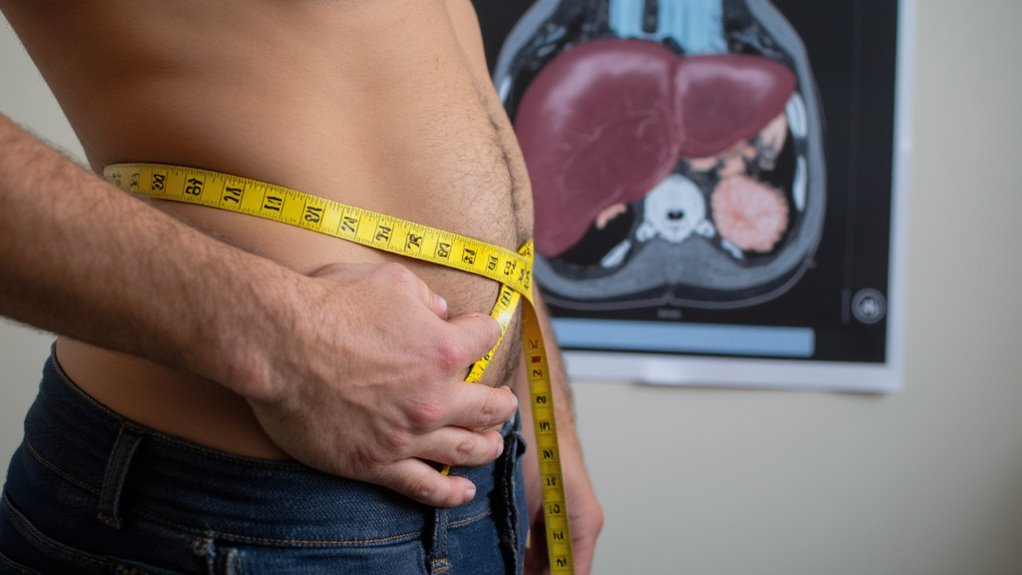
Understanding your personal risk for liver complications begins with accurate measurement of visceral fat, the dangerous type that surrounds internal organs.
You’ll want to measure your waist circumference—women should stay below 35 inches and men below 40 inches to minimize liver disease risk.
Your waist-to-hip ratio presents another critical assessment; exceed 0.85 for women or 0.90 for men, and you’re facing elevated nonalcoholic fatty liver disease risk.
Similarly, maintain your waist-to-height ratio below 0.5, regardless of gender.
Don’t overlook your BMI; readings of 30+ strongly correlate with problematic visceral fat accumulation.
Regular screenings, especially if you have metabolic syndromes or family history, remain essential for protecting your liver health.
Dietary Strategies to Reduce Both Liver Fat and Abdominal Weight

Now that you’ve assessed your risk factors, your focus should shift to practical dietary approaches that target both liver fat and stubborn abdominal weight simultaneously. The Mediterranean diet stands out as a clinically-proven strategy that supports liver health while tackling abdominal obesity.
- Incorporate healthy fats from olive oil, avocados, and fatty fish to reduce inflammation and improve liver function.
- Limit sugar consumption, particularly from sweetened beverages, as excessive intake directly contributes to liver fat accumulation.
- Consider intermittent fasting protocols, which research shows can enhance fat oxidation and insulin sensitivity.
- Combine dietary changes with regular exercise (150+ minutes weekly) to maximize fat loss and liver health benefits.
- Focus on soluble fiber from sources like oats and legumes, as it can significantly reduce visceral fat and support overall metabolic health.
Exercise Approaches That Target Both Liver Health and Stomach Fat

Exercise presents a powerful dual mechanism for tackling both liver steatosis and abdominal obesity simultaneously, creating a synergistic effect that exceeds the benefits of dietary modifications alone.
You’ll see remarkable improvements in liver health by committing to 150 minutes of weekly aerobic exercises, which effectively reduces visceral fat while enhancing insulin sensitivity.
Adding strength training twice weekly builds metabolism-boosting muscle mass, while HIIT delivers exceptional results through its intense work-recovery pattern.
The combination of these exercise modalities creates a comprehensive approach that can halt or even reverse nonalcoholic fatty liver disease progression, notes research, making consistent physical activity non-negotiable for those seeking freedom from liver complications.
Engaging in stress management techniques can also support liver health by lowering cortisol levels, which in turn helps reduce abdominal fat storage.
Lifestyle Modifications Beyond Diet and Exercise

While diet and exercise form the cornerstone of any liver health strategy, comprehensive lifestyle modifications beyond these two pillars can dramatically accelerate your progress in reducing stomach fat and improving hepatic function.
Research confirms that addressing these often-overlooked factors can greatly enhance results:
- Stress Management – Practice yoga or meditation to reduce cortisol levels that drive visceral fat storage around essential organs.
- Sleep Prioritization – Ensure 7-8 hours of quality sleep to regulate appetite hormones that affect weight loss.
- Incidental Movement – Break up sedentary behavior with household chores, gardening, or walking.
- Alcohol Reduction – Gradually decrease alcohol consumption to support liver health and reduce waist circumference.
- Engaging in gentle core-strengthening exercises post-pregnancy can help tone the abdominal area and support overall recovery, contributing to a reduction in stomach fat.
Medical Interventions and When to Seek Professional Help

Despite earnest lifestyle modifications, persistent stomach fat and concerning liver parameters may signal the need for medical intervention beyond self-directed efforts. You’ll need professional help if your BMI exceeds 27, as excess visceral fat markedly increases your risk for nonalcoholic fatty liver disease.
| Warning Signs | Medical Interventions | Follow-up Care |
|---|---|---|
| BMI > 27 | Prescription medications | Regular liver function tests |
| High blood pressure | Weight loss surgery | Quarterly check-ups |
| Elevated liver enzymes | Lipid-lowering drugs | Imaging studies |
| Metabolic syndrome | Insulin sensitizers | Nutritional counseling |
| Abdominal discomfort | Bariatric procedures | Liver biopsy monitoring |
Regular monitoring of liver function becomes essential, particularly when NAFLD progresses to more severe forms like nonalcoholic steatohepatitis.
Frequent Questions and Answers on Liver Health and Stomach Fat
Can Liver Issues Cause Belly Fat?
Holy Jupiter’s thunder! Your liver function impacts metabolic health, potentially causing abdominal obesity. When your liver can’t properly handle detoxification processes, hormonal balance suffers, affecting weight management despite your dietary impacts.
Does Belly Fat Mean Fatty Liver?
Belly fat doesn’t guarantee you have fatty liver, but it’s a major risk factor. Your expanding waistline signals potential metabolic syndrome and insulin resistance. Take control through lifestyle changes and weight management to protect your health.
What Are the Four Warning Signs of a Damaged Liver?
Coincidentally, you’re asking about liver health! You’ll notice jaundice with yellowing skin, unexplained fatigue draining your energy, abdominal swelling restricting your freedom, and itchy skin that won’t let you rest.
Can Liver Problems Cause Bloating?
Yes, liver dysfunction symptoms often include bloating. When your liver can’t properly detoxify, you’ll experience fluid retention and gastrointestinal issues. Diet influence and hormonal imbalances worsen these digestive health problems.
What Is the No. 1 Food That Causes Fatty Liver?
Ironically, as you’re reading this, high-fructose corn syrup is damaging livers nationwide. It’s the #1 fatty liver culprit, hiding in processed foods and driving sugar consumption, weight gain, and metabolic syndrome worse than alcohol effects.